 Pin Now
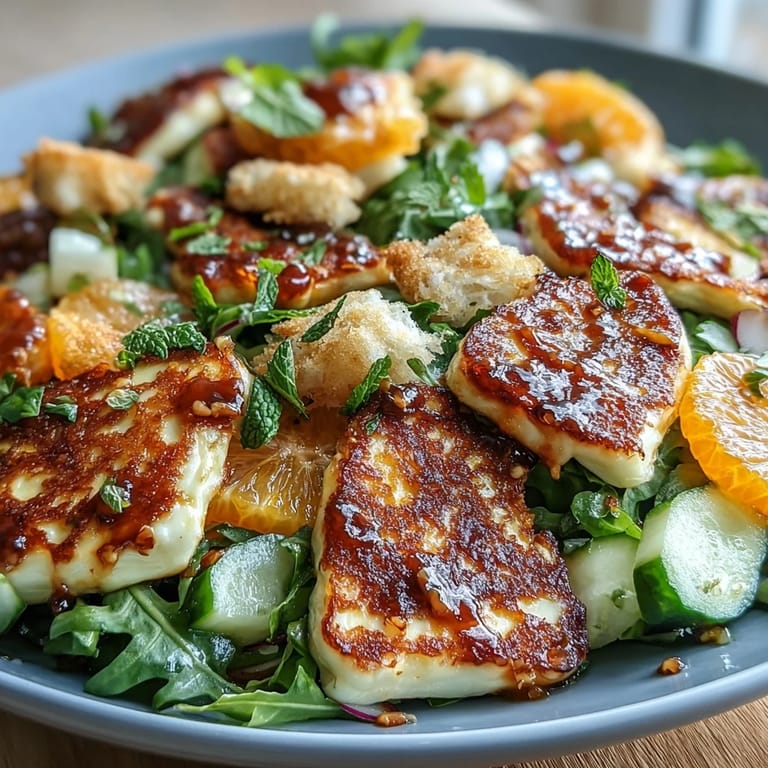
 My neighbor brought over a container of blood oranges last winter, their deep crimson flesh practically glowing through the plastic wrap, and I stood there wondering what on earth to do with them beyond juice. Then I remembered a fattoush I'd eaten years ago at a tiny restaurant in Beirut, all vinegary punch and crispy bread, and suddenly the two memories collided into something I had to make. That first bite—the warm halloumi squeaking between my teeth, the tart citrus cutting through the salty cheese, the bread still crackling—I knew I'd found exactly what those blood oranges were meant for.
I made this for friends who were skeptical about warm cheese in a salad, and watching their expressions shift when they tasted how the heat from the halloumi mellowed against the cool greens and cold orange slices was absolutely worth all the chopping. By the end of the meal, one of them was scraping the bottom of the bowl with bread, asking for the recipe before dessert even arrived.
Ingredients
- Halloumi cheese, sliced: Buy the thickest slices your counter will give you—thin ones disappear too fast, and you want that substantial squeak and golden crust that happens only with proper thickness.
- Blood oranges, peeled and sliced into rounds: Their deep color and subtle tartness beat regular oranges by miles, though regular ones work if that's what you've got on hand.
- Mixed salad greens: Use whatever feels fresh—romaine for crunch, arugula for peppery attitude, parsley and mint for that green herbaceous lift.
- Cucumber, sliced: A half is usually perfect; too much and it waters everything down.
- Cherry tomatoes, halved: These little pops of sweetness balance the vinegar in ways larger tomatoes can't quite manage.
- Radishes, thinly sliced: They add a sharp, almost peppery bite that keeps your palate awake.
- Red onion, thinly sliced: Raw red onion is assertive, which is exactly what a salad this colorful needs.
- Sourdough bread, cut into cubes: Thick slices become cubes that stay crispy rather than sad, and sourdough's tang plays beautifully with the sumac.
- Extra virgin olive oil: Quality matters here because it's the backbone of your dressing and the medium for frying.
- Fresh lemon juice and red wine vinegar: Together they create a brightness that neither could achieve alone.
- Ground sumac: This is non-negotiable—it's floral, citrusy, and just slightly astringent in a way that transforms the entire salad.
- Pomegranate molasses: A small spoon of this carries enormous flavor, adding depth and a subtle sweetness without tasting like actual sweetness.
Tired of Takeout? 🥡
Get 10 meals you can make faster than delivery arrives. Seriously.
One email. No spam. Unsubscribe anytime.
Instructions
- Toast your bread into golden croutons:
- Preheat your oven to 180°C and toss those sourdough cubes with olive oil and salt until they're glistening, then spread them on a baking sheet and watch them closely for 8 to 10 minutes—you want them golden and crisp, not dark and bitter, turning them halfway through so they brown evenly.
- Build your dressing:
- In a small bowl, whisk together the olive oil, lemon juice, red wine vinegar, sumac, pomegranate molasses, salt, and pepper, tasting as you go because seasoning is deeply personal and you might want a touch more of anything.
- Fry the halloumi until it squeaks:
- Heat a tablespoon of olive oil in your nonstick skillet over medium heat and slide in the halloumi slices, listening for that immediate sizzle and then watching for the golden-brown crust to form—about 1 to 2 minutes per side—before sliding them onto a waiting plate.
- Assemble your salad bowl:
- Combine all your greens, cucumber, tomatoes, radish, and red onion in a large bowl, creating a base that looks promising before anything else arrives.
- Bring it all together:
- Add the blood orange slices, the still-warm halloumi, and those crispy croutons to your greens, then drizzle everything with that sumac vinaigrette and toss gently—you're looking to coat everything without bruising the delicate leaves or breaking apart the cheese.
- Serve immediately:
- This is the kind of salad that waits for no one; the warmth of the halloumi and the freshness of everything else is the whole point, so get it to the table right away.
 Pin Now
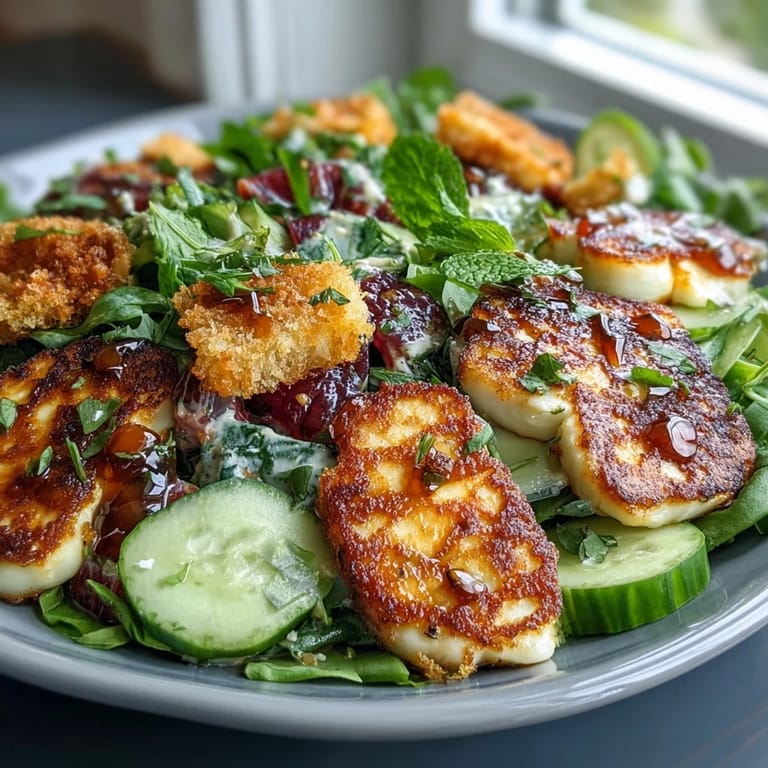
 There's a particular moment when you pour that dressing over everything and the whole bowl suddenly coheres—the greens glisten, the citrus catches the light, the warm cheese mingles with cool leaves—and you realize this isn't just salad, it's a full conversation between textures and temperatures and flavors that shouldn't work but absolutely do. That's when you know you've created something worth repeating.
Why This Salad Feels Special
Fattoush is traditionally about making something complete from simple ingredients, and there's something deeply satisfying about that philosophy—nothing fancy or fussy, just balance and brightness and knowing how each element earns its place on the plate. The halloumi is your anchor, the blood oranges are your luxury, the greens are your integrity, and together they become something that tastes like you understand how to eat.
Playing with Temperature and Texture
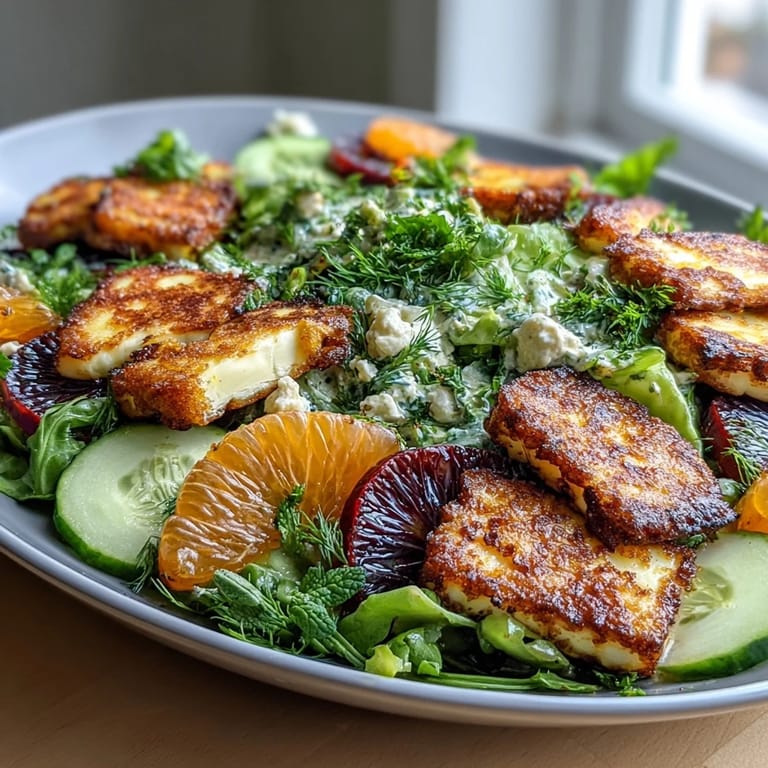
What makes this salad feel sophisticated is honestly just the temperature contrast—that warm halloumi against cool greens and cold oranges creates this dynamic interplay that keeps your mouth interested with every bite. It's the same reason people love deconstructed dishes; when things aren't all the same temperature and texture, they feel more like an experience than just lunch.
Making It Your Own
The beauty of fattoush is that it's inherently flexible—it's built on the idea of using what you have and making it sing, so feel free to riff on the greens, the vegetables, even the bread if you prefer something sturdier. I've made this with labneh drizzled over the top, with toasted walnuts scattered across, with a handful of olives for extra brine and body—each version feels like a different conversation but tells the same fundamental story.
- Fresh mint leaves torn right before serving add a cooling brightness that dried mint simply cannot replicate.
- A sprinkle of toasted pine nuts or almonds brings a richness that transforms the salad from light to genuinely satisfying.
- If you can't find pomegranate molasses, a squeeze of extra lemon juice and a tiny pinch of sugar approximate the flavor reasonably well.
 Pin Now
 This salad became my answer to the question of how to make something that feels both comforting and exciting, substantial yet light, complex yet simple to execute. Make it once and you'll find yourself reaching for blood oranges in season, knowing exactly what magic is waiting.
Recipe FAQs
- → What makes this fattoush unique?
Traditional fattoush features fried bread, but this version adds golden halloumi and blood oranges for extra protein and vibrant citrus flavor. The sumac vinaigrette provides authentic Middle Eastern tanginess.
- → Can I prepare components ahead?
Yes, make the dressing and croutons up to 24 hours in advance. Store them separately in airtight containers. Fry halloumi just before serving for best texture.
- → What can substitute halloumi?
Grilled paneer, firm feta, or extra-firm tofu work well. For vegan options, try marinated and grilled tofu or vegan feta alternatives.
- → How do I prevent soggy croutons?
Bake until completely crisp and golden. Cool thoroughly before storing. Add to salad just before tossing with dressing to maintain crunch.
- → What other citrus works here?
Regular oranges, grapefruit, or segmented mandarins substitute beautifully. Each brings slightly different sweetness levels to balance the salty halloumi.
- → Is this served warm or cold?
Best enjoyed warm with freshly fried halloumi and room-temperature croutons. The contrast of warm cheese against crisp, cool greens creates the ideal texture balance.