 Pin Now
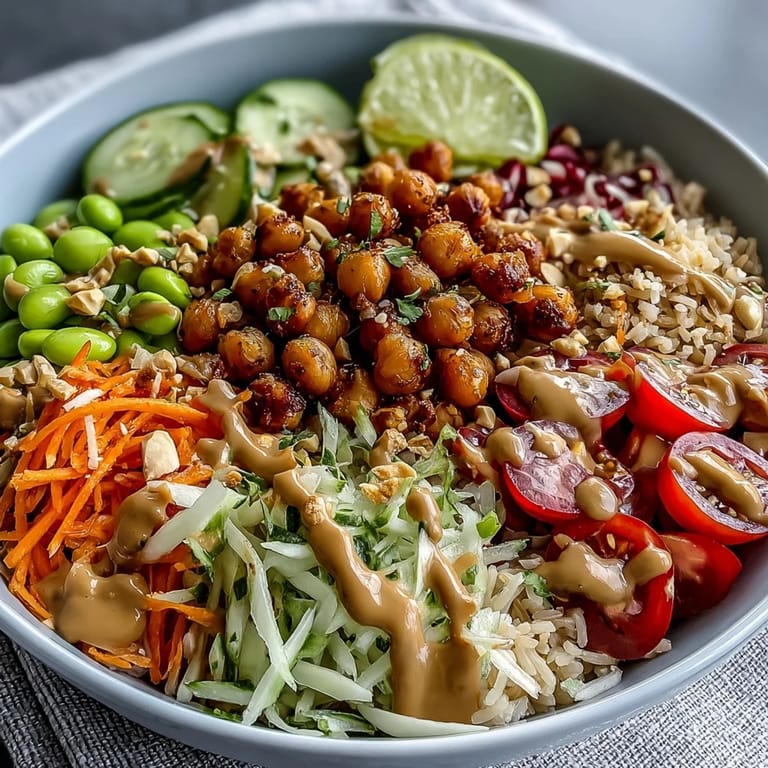
 Last summer, a friend brought over a bowl of roasted chickpeas with peanut sauce, and I watched her eat it with such quiet contentment that I had to ask for the recipe. She described it casually, like it wasn't anything special, but the way those spiced chickpeas caught the light and the creaminess of that sauce told a different story. That afternoon, standing in my kitchen with late sunlight streaming across the counter, I realized this bowl wasn't just lunch—it was a moment of pure, uncomplicated nourishment.
I made this for a potluck where everyone was supposed to bring something light, and I showed up with four of these bowls, slightly nervous about whether they'd actually eat them. Within twenty minutes, there were requests for the recipe scribbled on napkins and genuine surprise that nothing in the bowl came from an animal. That's when I understood the quiet power of this dish—it doesn't announce itself, but it wins people over completely.
Ingredients
- Chickpeas (2 cans, drained and rinsed): The foundation of everything—when you roast these with spices, they transform into something crispy and craveable that feels almost like eating little nuggets of flavor.
- Olive oil (1 tbsp): Just enough to coat and help those chickpeas brown properly without turning them greasy.
- Smoked paprika, cumin, garlic powder, salt, and pepper: This spice combination is forgiving and builds depth—use these proportions as a starting point, but trust your nose and taste buds.
- Brown rice or quinoa (2 cups cooked): The canvas that holds everything together; make this ahead of time if you want to streamline your evening.
- Fresh vegetables (red cabbage, carrots, cucumber, cherry tomatoes): The crunch and freshness prevent the bowl from feeling heavy, and you can prep these in the morning if you're planning ahead.
- Edamame (1/2 cup) and cilantro (1/4 cup): These add pops of color and herbaceous brightness that lift the entire dish.
- Creamy peanut butter (1/3 cup): The heart of the sauce—use natural peanut butter if you have it, but honestly any good quality version works beautifully.
- Soy sauce (2 tbsp): This brings umami and saltiness; use tamari if you're avoiding gluten and you won't notice a difference.
- Maple syrup or honey (1 tbsp): The small touch of sweetness that balances the sauce's intensity.
- Rice vinegar (1 tbsp): The brightness that keeps the sauce from becoming one-note.
- Sriracha or chili sauce (1 tsp, optional): A whisper of heat if you want it, easily skipped if you prefer milder flavors.
- Garlic (1 clove, minced) and warm water (2–4 tbsp): Fresh garlic gives the sauce personality, and the water loosens everything into pourable perfection.
- Roasted peanuts (2 tbsp chopped), sesame seeds, and lime wedges: The finishing touches that add texture and brightness to each bite.
Tired of Takeout? 🥡
Get 10 meals you can make faster than delivery arrives. Seriously.
One email. No spam. Unsubscribe anytime.
Instructions
- Heat your oven and prepare:
- Preheat to 425°F and line a baking sheet with parchment paper—this prevents sticking and makes cleanup almost effortless. You want the oven hot and ready to go.
- Toss and roast the chickpeas:
- In a mixing bowl, combine drained chickpeas with olive oil and all the spices, stirring until every single chickpea wears a thin, spiced coat. Spread them in a single layer on the sheet, and roast for 20–25 minutes, shaking the pan halfway through—they'll smell absolutely incredible when they're golden and starting to crisp at the edges.
- Make the peanut sauce while they roast:
- In another bowl, whisk together peanut butter, soy sauce, maple syrup, rice vinegar, sriracha if using, and minced garlic. Add 2 tablespoons of warm water and whisk until smooth, then keep adding water a tablespoon at a time until the sauce flows like velvety silk from your whisk.
- Prep your vegetables and grains:
- If your rice or quinoa isn't already cooked, get that started according to package directions. While it cooks or finishes, slice and arrange your vegetables on a cutting board—this is also a perfect moment to taste things and adjust if needed.
- Assemble your bowls:
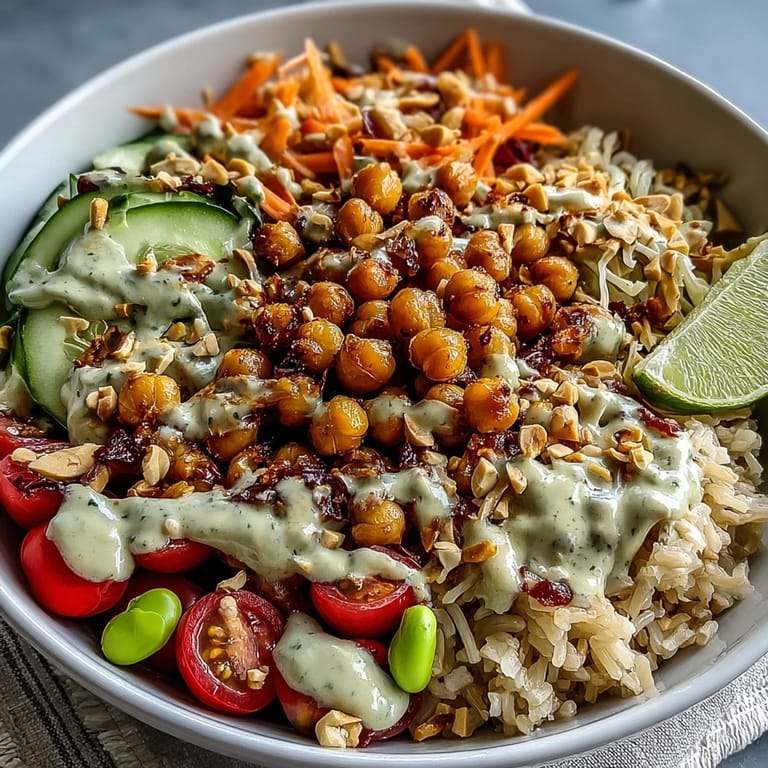
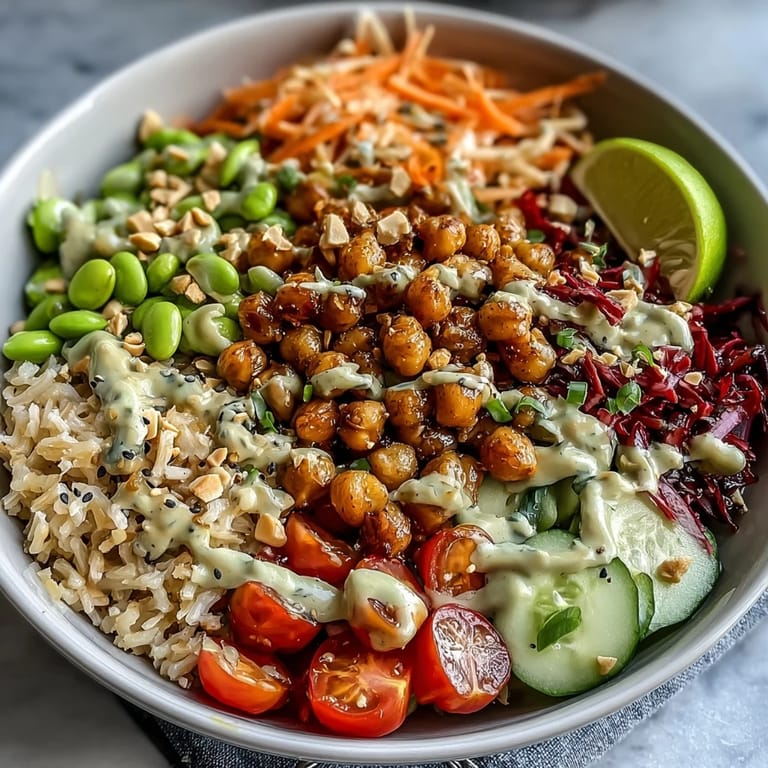
- Divide the warm rice or quinoa among four bowls, then arrange the roasted chickpeas and all the fresh vegetables on top in whatever pattern makes you happy. There's no wrong way to do this.
- Finish with sauce and toppings:
- Drizzle each bowl generously with peanut sauce—don't be shy here—then scatter chopped roasted peanuts and sesame seeds across the top. Serve with lime wedges on the side so people can brighten their bowls as they eat.
 Pin Now
 A few weeks ago, I made these bowls for myself on a day when everything felt overwhelming, and something about the ritual of assembling them—the rhythmic chopping, the warmth from the oven, the way the sauce smelled like comfort—brought me back to solid ground. Food doesn't always have to be complicated to matter deeply.
Ways to Make It Your Own
This bowl is remarkably flexible, which is part of what makes it so reliable. If you have spinach or kale lingering in your crisper drawer, toss handfuls onto the warm rice and let them wilt slightly from the heat—it adds greens without requiring extra cooking. For a lower-carb version, swap the rice for cauliflower rice, and the bowl becomes something entirely different while keeping all the satisfying elements intact. You can also swap vegetables based on what's in season or what you're craving; bell peppers, shredded beets, and sliced avocado have all found their way into my versions over time.
The Magic of That Peanut Sauce
The sauce is honestly where the transformation happens, turning what could be a simple salad into something craveable and complete. I've made this sauce dozens of times now, and I've learned that every brand of peanut butter behaves slightly differently—some need more water, some less—so tasting as you go is the real trick. If you find yourself with extra sauce, it keeps beautifully in the refrigerator for several days and works beautifully over roasted vegetables, grain bowls, or even as a dip for fresh fruit.
Timing and Prep Strategy
The entire bowl comes together in about forty-five minutes, but here's what I've learned about making it feel even easier: prep your vegetables in the morning if you have time, cook your grain ahead, and make the sauce even earlier if you want. When it's dinnertime, you're essentially just roasting chickpeas and assembling, which means you can have a completely satisfying meal on the table in less than thirty minutes if you're working with components already prepared.
- Make the peanut sauce up to three days ahead, and it'll actually develop deeper flavor sitting in the refrigerator.
- Roast the chickpeas fresh on the day you eat the bowl—they lose their crispness after a few hours, but the flavor remains wonderful.
- Build your bowls right before eating so the rice stays warm and the vegetables stay crisp.
 Pin Now
 This bowl has become my go-to when I need to feed myself well without overthinking it, and it somehow tastes different every time I make it. That's the real gift of cooking something this simple and honest.
Recipe FAQs
- → Can I make this bowl ahead of time?
Yes, most components can be prepared in advance. Roasted chickpeas stay crisp for 2-3 days when stored airtight, and the peanut sauce keeps refrigerated for up to a week. Chop vegetables beforehand and assemble bowls when ready to serve.
- → What other grains work well in this bowl?
Brown rice and quinoa are excellent choices, but you can also use farro for a nutty texture, bulgur for quicker cooking, or cauliflower rice for a lighter low-carb option. Each grain provides a different base that complements the bold peanut flavors.
- → How do I adjust the peanut sauce consistency?
Start with 2 tablespoons of warm water when whisking the sauce. For a thicker dipping consistency, use less water. To make it pourable for drizzling, add additional warm water one tablespoon at a time until desired thinness is reached.
- → Can I roast the chickpeas without oil?
While olive oil helps achieve optimal crispiness, you can roast chickpeas without oil. They will still become crunchy but may take slightly longer and develop a drier texture. The spices will still adhere, especially if you toss them while the chickpeas are still slightly damp from rinsing.
- → Is this bowl freezer-friendly?
The roasted chickpeas freeze beautifully for up to 3 months—just reheat in the oven to restore crispness. However, fresh vegetables and assembled bowls are best enjoyed fresh. The peanut sauce can be frozen in small portions and thawed overnight in the refrigerator.
- → What protein alternatives can I use?
Beyond chickpeas, try roasted edamame, baked tofu cubes, or tempeh for similar protein content. Grilled chicken or shrimp work well if you eat meat. Lentils also provide excellent plant-based protein and pair beautifully with the peanut sauce.