 Pin Now
 There's something about the smell of sesame oil hitting a hot pan that makes me pause whatever I'm doing—it's the kind of scent that pulls you into the kitchen whether you planned to cook or not. Years ago, a friend showed up at my apartment on a sweltering afternoon with a craving and absolutely no energy to sit at a restaurant, so I threw together what would become my go-to noodle bowl. The whole thing came together in under thirty minutes, and somehow it felt like I'd done something impressive, even though it was just the right vegetables meeting the right sauce at the right moment.
I made this for a potluck where everyone was bringing something complicated, and I remember feeling a little sheepish showing up with noodles in a bowl. By the end of the night, the bowl was completely emptied and three people asked for the recipe—one of them even sent me a photo months later of her version, customized with whatever vegetables she had on hand. That's when I realized sometimes the simplest things are exactly what people need.
Ingredients
- Rice noodles or wheat noodles (300 g / 10 oz): Rice noodles keep things lighter and have a delicate texture, but wheat noodles add a heartier chew if you prefer something more substantial—both work beautifully.
- Carrot (1 medium, julienned): The sweetness here balances the savory dressing, and julienning by hand (rather than a food processor) keeps the pieces elegant and gives you something meditative to do.
- Red bell pepper (1 small, thinly sliced): Red peppers are sweeter than green ones and add a pop of color that makes the whole bowl feel intentional.
- Red cabbage (1 cup / 80 g shredded): Its slight bitterness keeps the dish from tasting one-note, and the crunch holds up even if you're eating this tomorrow.
- Scallions (2, thinly sliced): Slice them right before serving so they stay crisp and keep their bright onion bite.
- Fresh cilantro (1/2 cup / 15 g leaves): If you're someone who finds cilantro soapy, swap it for mint or basil—the bowl won't judge you.
- Bean sprouts (1/2 cup / 30 g): These add an almost creamy texture when they're fresh, so buy them close to when you plan to cook.
- Creamy peanut butter (1/3 cup / 80 g): Use the kind without added sugar if you can find it; the dressing will taste cleaner and you'll taste the peanut more clearly.
- Soy sauce (2 tbsp): Tamari works if you need gluten-free, but regular soy sauce has a deeper umami that I notice in every bite.
- Sesame oil (1 tbsp): A little goes a long way with sesame oil—it's concentrated and assertive, which is exactly what you want here.
- Rice vinegar (1 tbsp): This keeps the dressing bright without the sharpness of regular vinegar.
- Honey or maple syrup (1 tbsp): Honey dissolves more smoothly into the warm dressing, but maple syrup works if that's what you have.
- Freshly grated ginger (1 tsp): Grate it fresh; ground ginger tastes like cardboard in comparison.
- Garlic clove (1 small, minced): One clove is plenty—you're flavoring, not overwhelming.
- Warm water (2–4 tbsp): Add this gradually while whisking so you actually feel the dressing reach the consistency you want rather than overshooting it.
- Roasted peanuts (2 tbsp, roughly chopped): Rough chopping keeps them from disappearing into the noodles and gives you pockets of texture.
- Toasted sesame seeds (1 tsp): Buy them pre-toasted or toast them yourself for thirty seconds in a dry pan—the difference is noticeable.
- Lime wedges: These are essential, not optional; squeeze them over the bowl right before eating so the acidity wakes everything up.
Tired of Takeout? 🥡
Get 10 meals you can make faster than delivery arrives. Seriously.
One email. No spam. Unsubscribe anytime.
Instructions
- Cook the noodles until tender:
- Bring a large pot of water to a rolling boil, add noodles, and cook according to the package timing—usually five to seven minutes. The moment they're tender enough to bite through without resistance, drain them into a colander. Run them under cold water while stirring gently with your fingers to rinse away the starch and stop them from cooking further; this step is what keeps them from clumping into a solid mass.
- Build the peanut dressing:
- In a medium bowl, whisk the peanut butter with soy sauce, sesame oil, rice vinegar, honey, ginger, and garlic until it starts to come together. The mixture will look thick and almost chunky at first, but keep whisking—it'll smooth out. Once it looks creamy, add warm water a tablespoon at a time, whisking constantly until you have something that pours smoothly but still clings to the noodles when tossed.
- Gather and prep your vegetables:
- While the dressing sits, julienne the carrot, slice the bell pepper thinly, shred the cabbage, slice the scallions, roughly chop the cilantro, and measure out the bean sprouts. Having everything prepped and ready means the actual assembly feels effortless.
- Combine noodles and vegetables:
- In a large mixing bowl, add the cooled noodles along with the carrot, bell pepper, cabbage, scallions, cilantro, and bean sprouts. Toss everything together gently with your hands or two spoons so nothing gets crushed. At this point, the bowl might look like a lot of separate components, but that's exactly right.
- Dress and toss until coated:
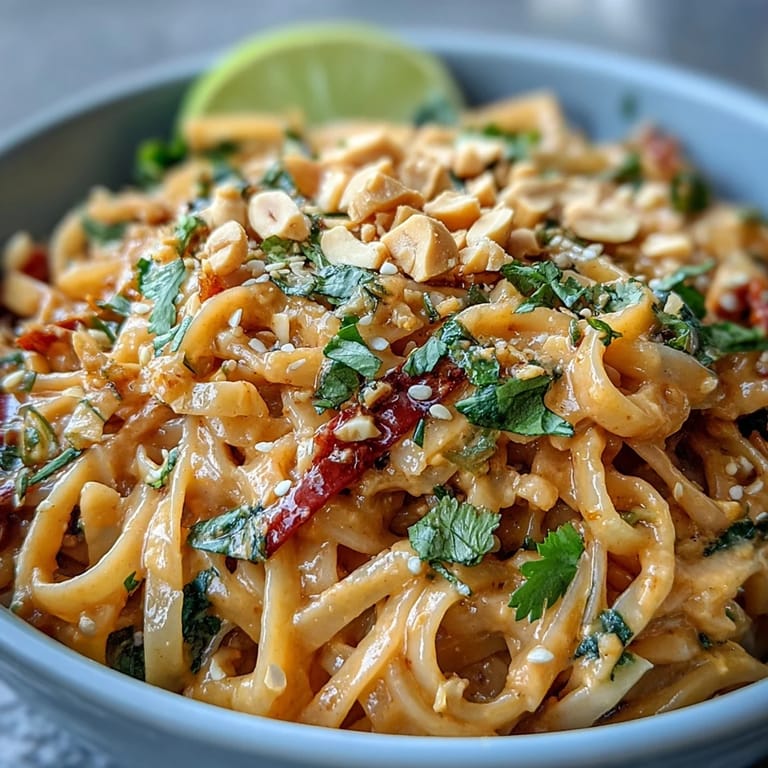
- Pour the peanut dressing over the noodle mixture and toss everything together using two spoons or your hands, making sure every noodle and vegetable gets coated. This takes longer than you'd think—maybe two minutes of constant tossing—but it's worth it because that's when the magic happens.
- Plate and finish:
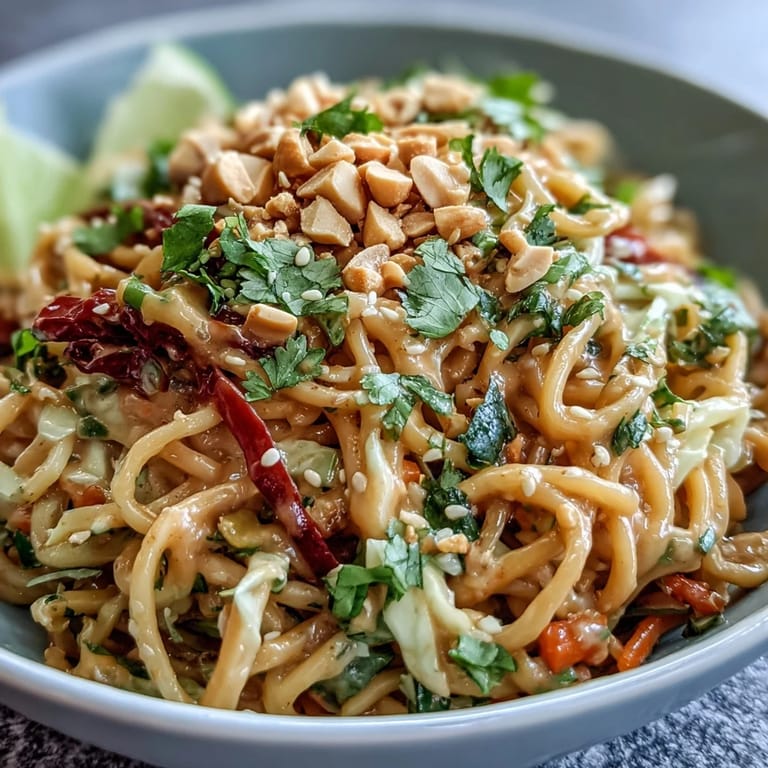
- Divide the noodle bowl among serving plates or bowls, then scatter the chopped peanuts, sesame seeds, and extra cilantro over the top. Serve with lime wedges so people can adjust the brightness to their taste.
 Pin Now
 I learned to love cooking when I stopped thinking of it as following instructions and started thinking of it as creating something to share. This noodle bowl is proof that sometimes the most memorable meals aren't the ones that took hours; they're the ones that felt easy to make and genuine to eat together.
Cold or Warm—Your Choice
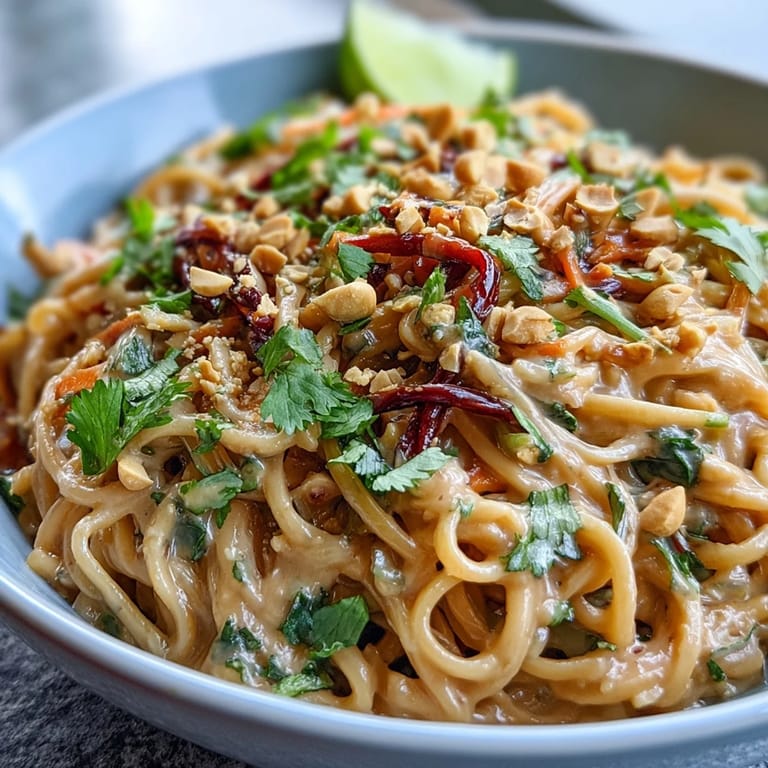
This bowl tastes stunning cold straight from the fridge, especially on days when turning on the stove feels like too much. But on cooler evenings, I've gently warmed the whole thing in a large pan over medium heat, stirring occasionally until it's just heated through—about five minutes. The warmth makes the peanut dressing taste even more luxurious, like it's wrapping around the noodles in a different way.
Building Your Own Variations
The beauty of a noodle bowl is that it invites customization without asking permission. I've made versions with sliced cucumber instead of bell pepper, swapped the cilantro for mint when I had it, and added snap peas for extra crunch. The dressing is flexible enough to hold everything together, so you're really just working with what your kitchen and mood offer that day.
Protein and Beyond
While this bowl stands perfectly well as-is for vegetarians, adding protein is as simple as tossing in whatever you have on hand. Grilled tofu cut into cubes, shredded rotisserie chicken, or quickly seared shrimp all meld into the noodles without overwhelming the delicate peanut flavor. I've also crumbled crispy tempeh over the top for a different kind of texture, and it changed the whole eating experience without changing the core recipe.
- If you're adding tofu, press it first and let it sit in the dressing for a few minutes so it absorbs the flavor.
- Shrimp should be cooked separately and cooled before adding so they don't warm up the entire bowl.
- Leftover rotisserie chicken is your shortcut—it's already cooked, already flavorful, and already asking to be used.
 Pin Now
 This noodle bowl has become my answer to the question 'what should we eat?' when the answer needs to be something that feels nourishing, tastes intentional, and doesn't require apologies or explanations. Make it once and it'll find its way into your regular rotation, I promise.
Recipe FAQs
- → Can I make this dish gluten-free?
Yes, use rice noodles instead of wheat noodles and substitute regular soy sauce with tamari. Double-check all ingredient labels to ensure they're certified gluten-free.
- → How long does the peanut dressing last?
The peanut dressing can be stored in an airtight container in the refrigerator for up to one week. The dressing may thicken when cold—simply whisk in a small amount of warm water to reach the desired consistency.
- → Can I prepare this bowl ahead of time?
You can prepare the vegetables and dressing up to 24 hours in advance. Store them separately in the refrigerator. Toss everything together just before serving to maintain the best texture and freshness.
- → What protein options work well with this dish?
Grilled tofu, shredded chicken, seared shrimp, or edamame make excellent additions. For a heartier meal, consider adding sliced steak or baked tempeh. Add your chosen protein when tossing everything together.
- → Is it better served hot or cold?
This versatile bowl tastes delicious either way. Serve chilled for a refreshing lunch, especially during warmer months. For dinner or cooler days, gently warm the dressed noodles in a skillet over low heat for 2-3 minutes.