 Pin Now
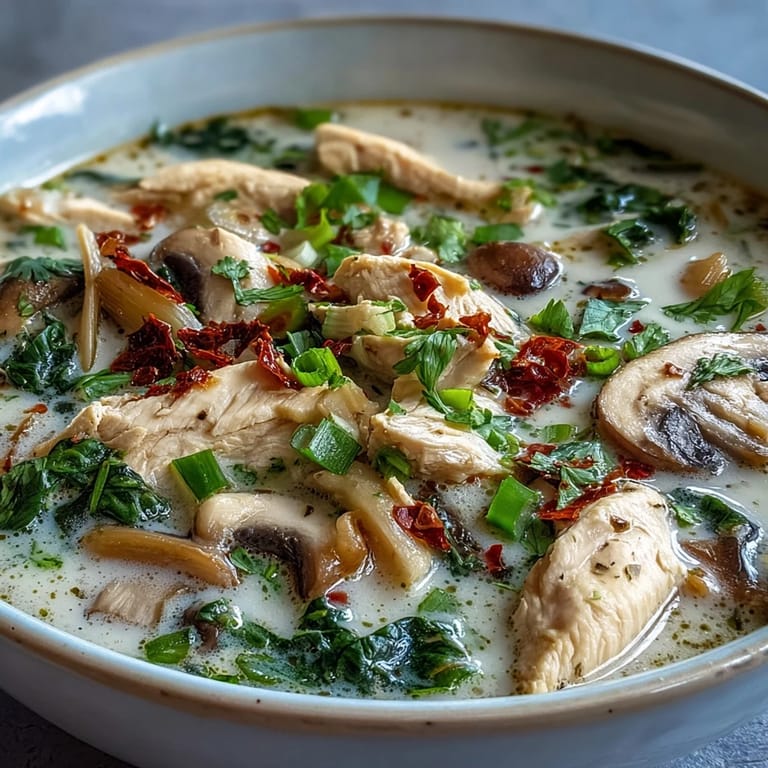
 My first real encounter with Tom Kha Gai wasn't in a restaurant or from a cookbook—it was at my neighbor's kitchen counter on a rainy afternoon when she casually mentioned her sister had just returned from Bangkok. She'd learned to make this soup the proper way, and instead of keeping it a secret, she invited me over to watch. The smell that filled her kitchen was unlike anything I'd experienced before: that peculiar brightness of lemongrass mixing with the earthiness of galangal, all wrapped up in creamy coconut. I've been chasing that exact moment ever since.
There was this one dinner party where I made Tom Kha Gai for the first time for guests, and I was honestly nervous about the makrut lime leaves—would people find them odd? Would the galangal taste too unfamiliar? But the moment everyone tasted it, the room went quiet in that good way, and someone asked for the recipe before they'd even finished their bowl. That's when I realized this soup doesn't need permission to taste like Thailand; it just needs to be made with intention.
Ingredients
- Chicken broth: The foundation deserves quality; homemade is best, but a good low-sodium store-bought version works if you're being honest with yourself about time constraints.
- Lemongrass: This is non-negotiable for authentic flavor—trim the dry outer layers and smash it gently to release those oils.
- Galangal: It looks like ginger but tastes more complex and slightly peppery; seek it out at Asian markets because ginger is a pale substitute, though I've used it in a pinch.
- Makrut lime leaves: They give a citrusy complexity that lime juice alone cannot deliver—tear them with your fingers just before adding so the oils stay alive.
- Thai bird's eye chilies: These pack heat without overpowering; crush them lightly to let the heat infuse gradually rather than explode all at once.
- Chicken thighs: Dark meat stays tender and flavorful through cooking, unlike breast which can turn dry and forgettable.
- Full-fat coconut milk: Don't even glance at the lite versions; the richness is the whole point here.
- Fresh mushrooms: Straw mushrooms are traditional and delicate, but cremini or shiitake work beautifully if that's what's available.
- Shallot: Sweeter and more subtle than onion, it melts into the broth without demanding attention.
- Fish sauce: It might smell funky in the bottle, but it becomes the savory backbone—start with less and taste as you go.
- Lime juice: Fresh lime is crucial; bottled versions miss the brightness that makes everything sing.
- Palm sugar: It rounds out the flavors in a gentler way than brown sugar, though both work.
- Cilantro and green onions: These are the finale, the freshness that prevents the soup from feeling heavy.
Tired of Takeout? 🥡
Get 10 meals you can make faster than delivery arrives. Seriously.
One email. No spam. Unsubscribe anytime.
Instructions
- Build your aromatic foundation:
- Bring the chicken broth to a gentle simmer and add the lemongrass, galangal, makrut lime leaves, and chilies—this 5 to 7 minute infusion is where the magic happens, so don't rush it. You'll notice the broth turn golden and smell completely transformative; resist the urge to dump everything in at once.
- Cook the chicken:
- Add your sliced chicken and shallot, stirring gently so they cook evenly in about 3 to 4 minutes until the chicken turns opaque and loses that raw look. This is the moment to taste a tiny spoonful to make sure your broth is balanced before the cream goes in.
- Marry the cream:
- Pour in the coconut milk along with the mushrooms and bring everything back to a gentle simmer—too vigorous a boil will break the emulsion and make things look curdled. Keep the heat moderate and stir occasionally to ensure the coconut milk integrates evenly.
- Season with intention:
- Fish sauce, palm sugar, and lime juice work together to create a savory-sweet-sour triangle; add a little of each, taste, and adjust because your preferences matter more than any recipe ever will. This is where you make the soup yours instead of just following instructions.
- Finish with care:
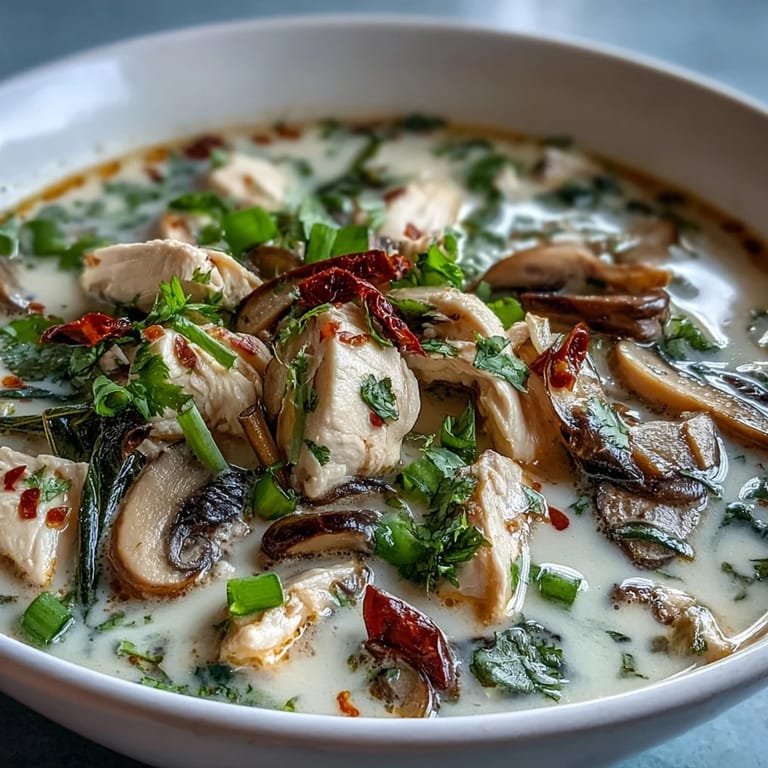
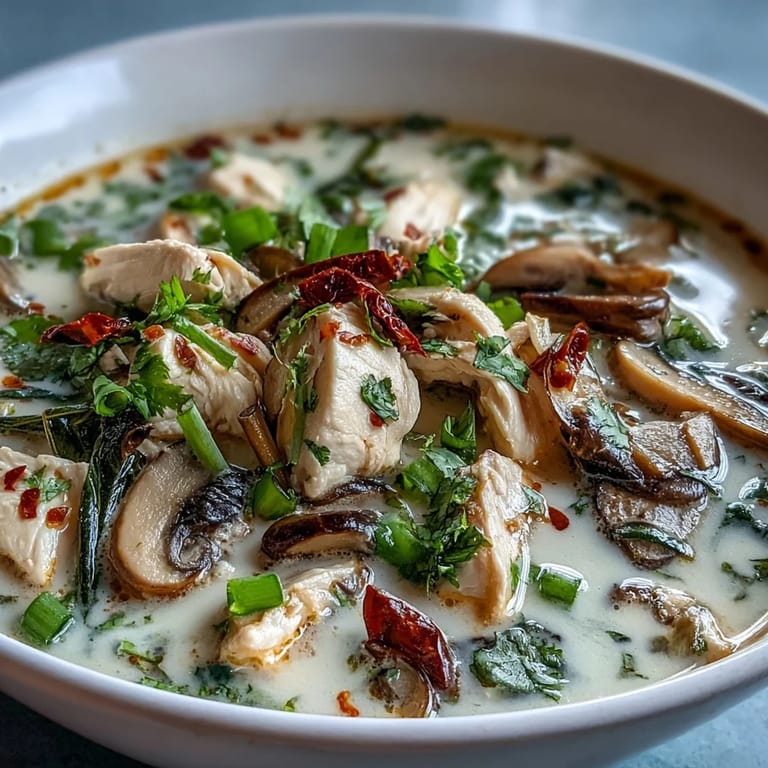
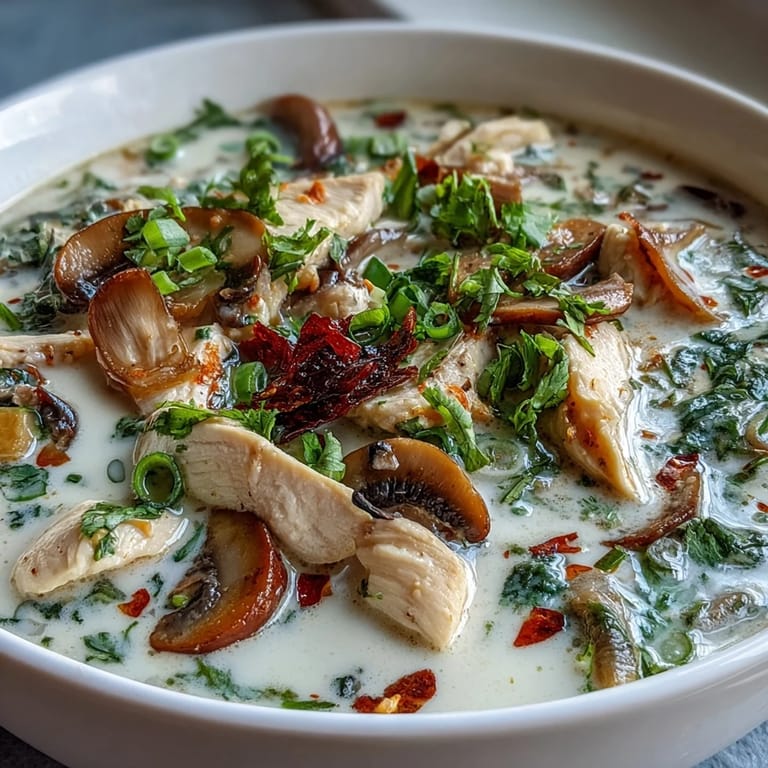
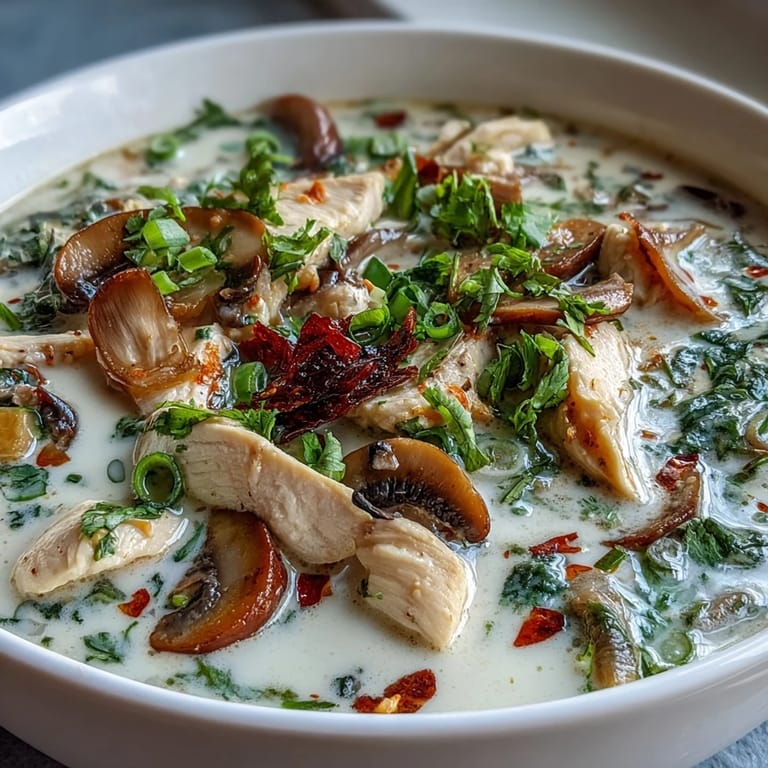
- Remove from heat and fish out the lemongrass, galangal slices, and lime leaves if you prefer a cleaner presentation, though leaving them adds to the experience. Ladle into bowls and shower each one with fresh cilantro, sliced green onions, and a lime wedge for squeezing.
 Pin Now
  Pin Now
 What transformed Tom Kha Gai from a recipe I made to a dish I actually understood happened when I stopped thinking about measurements and started thinking about balance—when I realized the salty, sour, and sweet elements were like a conversation where each flavor gets to speak. Now when I make it, I feel less like I'm following instructions and more like I'm having a quiet dialogue with the pot.
The Art of Aromatics
Most soups start with onions and garlic sautéed in oil, but Thai cooking speaks a different language entirely. Here, the aromatics stay whole or mostly whole, creating a more delicate infusion rather than a broken-down base—it's the difference between steeping tea and over-brewing it. The lemongrass, galangal, and makrut lime leaves release their essential oils into the liquid rather than disintegrating, so you taste their personality clearly rather than as muted background noise.
Finding Your Heat Level
Those Thai bird's eye chilies are beautiful little heat carriers, but they're not trying to burn your mouth—they're trying to wake up your palate. I've learned that crushing them lightly rather than mincing them fine gives you more control; the heat builds gradually as you eat instead of hitting you all at once like a surprise attack. If you're serving people with different spice preferences, consider leaving the chilies whole so guests can fish them out, or putting them on the side for people to add themselves.
Vegetarian Variations and Staying True to Flavor
A vegetarian version isn't a compromise if you treat it with the same respect as the original—swap the chicken for pressed tofu cut into bite-sized pieces, use vegetable broth instead of chicken broth, and swap fish sauce for soy sauce or tamari in equal measure. The aromatics carry so much weight in this soup that you honestly won't feel like anything is missing, though some people add a bit more lime juice for brightness. The trick is understanding that vegetarian doesn't mean less flavorful; it just means you're highlighting different elements of the same aromatic story.
- Pressed tofu absorbs flavor better than soft tofu, so give it a squeeze before slicing.
- Soy sauce tends to be saltier than fish sauce, so start conservatively and taste as you go.
- Adding an extra splash of coconut milk can deepen the richness when you're not working with chicken broth.
 Pin Now
  Pin Now
 Tom Kha Gai became my comfort soup because it reminds me that food doesn't have to be complicated to be memorable—it just has to be made with awareness. Every time I make it now, I'm grateful for that rainy afternoon and my neighbor's generous kitchen.
Recipe FAQs
- → Can I substitute galangal with ginger?
While fresh galangal provides authentic flavor, ginger can be used as a substitute if galangal is unavailable. Use the same amount, but note that ginger is slightly spicier and less citrusy than galangal.
- → What type of mushrooms work best?
Straw mushrooms are traditional and offer the most authentic taste, but cremini or white button mushrooms make excellent substitutes and are more readily available in most grocery stores.
- → How do I prevent the coconut milk from curdling?
Keep the heat at a gentle simmer and avoid boiling the soup vigorously once the coconut milk is added. Stirring gently and maintaining moderate temperature will keep the coconut milk smooth and creamy.
- → Can I make this ahead of time?
Yes, you can prepare it up to 2 days in advance. Store in an airtight container in the refrigerator and gently reheat on the stovetop. Add fresh herbs and lime juice just before serving for the best flavor.
- → How spicy is Tom Kha Gai?
The heat level is mild to moderate with 3 Thai chilies. You can adjust the spiciness by using fewer chilies or removing the seeds. The coconut milk helps balance and mellow the heat.
- → Where can I find makrut lime leaves?
Look for fresh or frozen makrut lime leaves at Asian grocery stores, particularly those specializing in Southeast Asian ingredients. They can also be purchased dried online, though fresh or frozen are preferred for better flavor.