 Pin Now
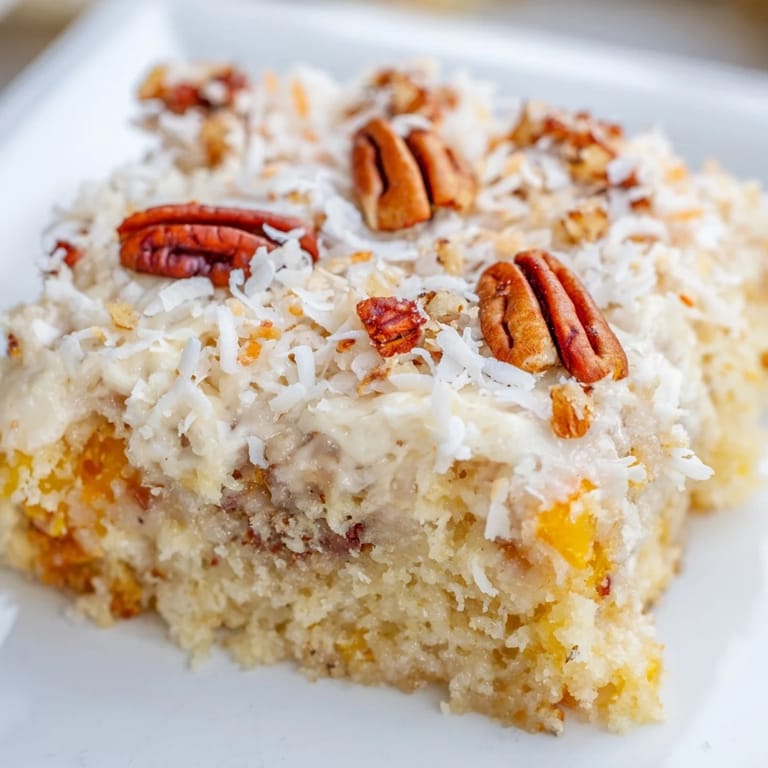
 My neighbor Sarah brought this cake to a block party on the hottest day of summer, and I watched people abandon their grilled burgers mid-bite to reach for another slice. She was modest about it, calling it "just something easy I threw together," but the way that canned fruit cocktail somehow became this impossibly moist, tender cake felt like her secret weapon. Years later, I finally asked for the recipe, and what struck me most wasn't the ingredients—it was how forgiving the whole thing turned out to be, even when I rushed through it after a long day at work.
I made this for my daughter's school bake sale, doubling the recipe because I wasn't sure how it would sell, and we sold out within twenty minutes. One parent actually asked if I'd delivered them from a bakery. There's something about the simplicity of canned fruit that people connect with—maybe it reminds them of their own childhood, or maybe they just love how good it tastes without pretense.
Ingredients
- All-purpose flour: The foundation of everything; don't sift it unless you want a denser crumb, and measuring by weight (250g) takes the guesswork out of how much you actually need.
- Granulated sugar: Sweetens both cake and frosting; this is where the cake gets its tender structure, so don't skimp or substitute with brown sugar here.
- Large eggs: They bind everything together and add richness; room temperature eggs mix more smoothly, though cold ones work just fine if you're in a hurry.
- Canned fruit cocktail in juice: The magic ingredient that keeps this cake impossibly moist; the juice is just as important as the fruit, so don't drain it no matter what.
- Baking soda: Activates with the fruit juice to help the cake rise gently and give it that tender crumb.
- Salt: A half teaspoon balances the sweetness and makes everything taste more rounded.
- Vanilla extract: A teaspoon adds warmth to the cake batter and frosting; pure vanilla is worth the slightly higher price.
- Unsalted butter: Use it in the frosting to control the salt level and get that glossy, pourable texture.
- Whole milk: Thins the frosting so it soaks into the warm cake; don't use condensed milk here, which would make it too thick.
- Sweetened shredded coconut: Toasts slightly as the hot frosting cooks, deepening its flavor and adding texture that people remember.
- Chopped pecans or walnuts: Optional, but they add a slight crunch and nutty depth that takes the frosting from good to memorable.
Tired of Takeout? 🥡
Get 10 meals you can make faster than delivery arrives. Seriously.
One email. No spam. Unsubscribe anytime.
Instructions
- Set up your oven and pan:
- Preheat your oven to 350°F and grease a 9x13-inch pan generously—I use butter and a light dusting of flour to prevent sticking. You want the cake to slide out easily once cooled, and a well-greased pan makes that happen.
- Mix the dry base:
- Whisk together flour, sugar, baking soda, and salt in a large bowl until evenly combined. This mixing step is important but brief; you're just distributing the leavening agent evenly so the cake rises uniformly.
- Add the wet ingredients:
- Crack in your eggs, pour in the entire can of fruit cocktail with its juice, and add the vanilla extract. Stir just until combined—this is not the time to beat vigorously, as overmixing develops gluten and makes the cake tough instead of tender.
- Get the cake in the oven:
- Pour the batter into your prepared pan and spread it evenly with a spatula. The batter will be thicker than you might expect, but that's exactly right because of all that fruit and juice.
- Bake until golden:
- Bake for 30 to 35 minutes; the cake is done when a toothpick inserted in the center comes out clean or with just a few moist crumbs. The kitchen will smell like sweet fruit and vanilla, and that's when you know you're close.
- Make the frosting while the cake bakes:
- In a medium saucepan, combine sugar, milk, and butter over medium heat. Stir often as it comes to a gentle boil—you want it hot enough to melt the coconut and distribute everything evenly, but not so violent that it spatters.
- Finish the frosting:
- Remove from heat and stir in the coconut, nuts if using, and vanilla extract. The frosting will seem quite pourable at this point, which is exactly what you want because it will soak into the warm cake.
- The crucial frosting step:
- As soon as the cake comes out of the oven, take a fork or skewer and poke holes all over the surface—don't be shy about this. Pour the hot frosting evenly over the entire cake, and watch it sink into those holes, creating little pockets of sweetness throughout.
- Cool and serve:
- Let the cake cool in the pan; this prevents it from breaking apart while the frosting sets slightly. You can serve it warm, at room temperature, or even chilled, and it stays moist no matter what.
 Pin Now
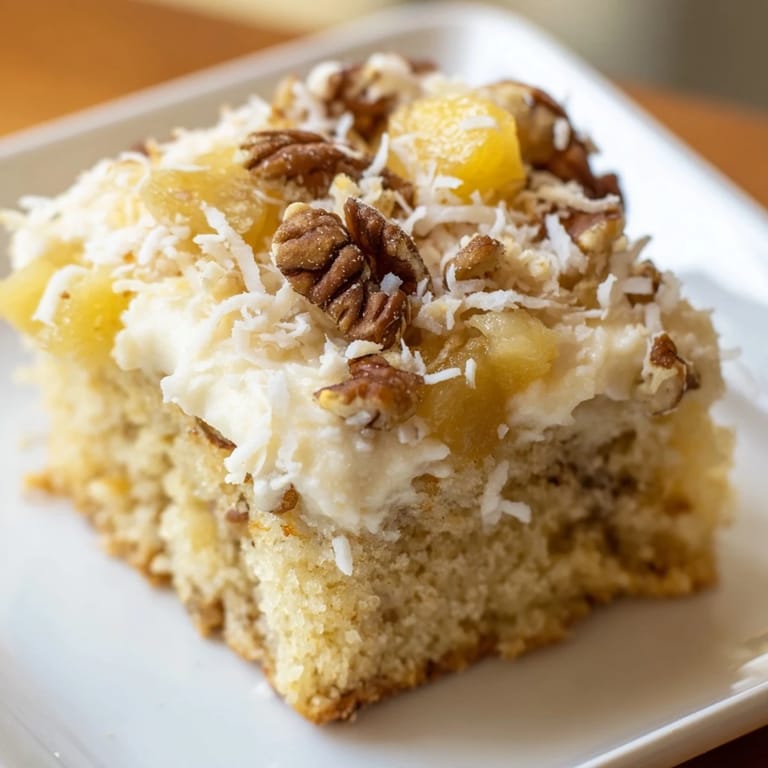
 I served this at a church potluck once, and a quiet woman I'd never spoken to before came up afterward and asked for the recipe with tears in her eyes. Turns out her mother made something very similar when she was a child, and this cake brought back a memory she thought she'd lost. That's when I understood that food isn't just about taste—it's about connection.
Why This Cake Works Every Time
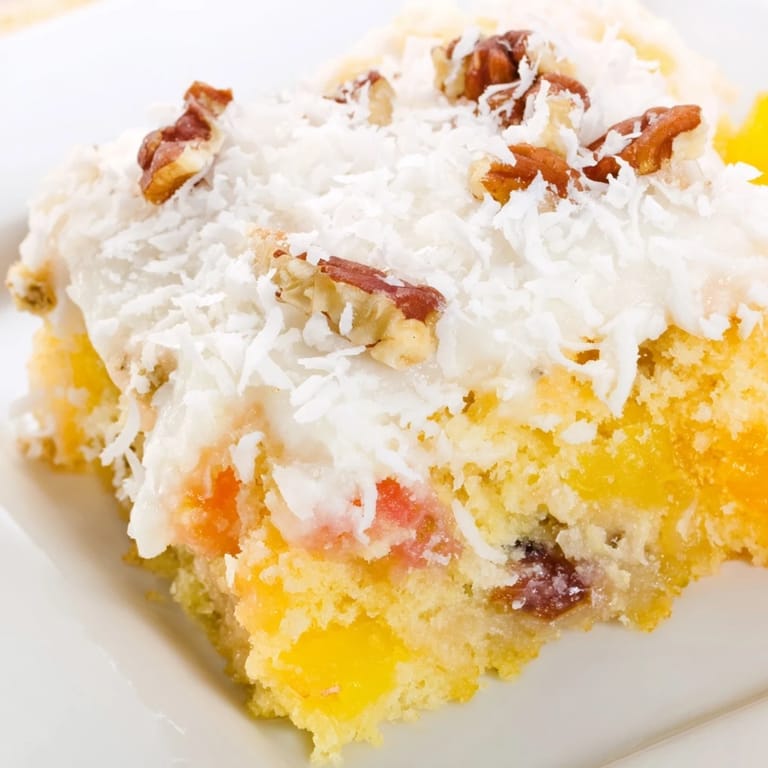
The secret is that canned fruit cocktail does two jobs at once: it sweetens the cake and keeps it moist through the juice. Most homemade cakes need to be wrapped and stored carefully to stay fresh, but this one actually improves after a day because the frosting continues to seep deeper into the crumb. I've made this cake in humid kitchens and dry ones, in summer and winter, and it behaves beautifully every single time.
The Frosting That Changes Everything
The hot coconut frosting is what separates this dessert from a basic fruit cake. By pouring it over the warm cake, you're creating something more like a tres leches cake—tender, soaked through, almost liquid in places. The pecans or walnuts aren't just decoration; they add a slight bitter note that balances all that sweetness and makes people reach for another slice.
Serving and Storing Ideas
This cake is wonderful on its own, but a scoop of vanilla ice cream on a warm slice transforms it into something restaurant-worthy. It keeps covered at room temperature for three days, and tastes even better on day two when the flavors have had time to settle.
- Serve warm from the pan for the most indulgent experience, or at room temperature for easier slicing.
- A cup of strong black coffee pairs beautifully with the sweetness and coconut flavor.
- Store leftovers covered with plastic wrap; this cake doesn't need refrigeration and stays moist on the counter.
 Pin Now
 This cake has become my go-to when I want something that feels homemade without the stress. It's proof that the simplest recipes often hold the most warmth.
Recipe FAQs
- → How can I make the frosting nut-free?
Simply omit the chopped pecans or walnuts from the coconut frosting to keep it nut-free without sacrificing flavor.
- → Can I substitute coconut milk in the frosting?
Yes, replacing whole milk with coconut milk enhances the coconut flavor and adds extra richness to the frosting.
- → What is the best way to ensure the cake stays moist?
Be sure to pour the warm coconut frosting evenly over the cake immediately after baking and poke holes to help absorption, locking in moisture.
- → Can this cake be served warm or cold?
This cake is delicious both warm or at room temperature, allowing the frosting to soak in beautifully either way.
- → What tools are needed for preparation?
Basic kitchen tools like mixing bowls, a whisk, a 9x13-inch baking pan, a saucepan, measuring cups and spoons, and a fork or skewer are required.
- → What allergens are present in this cake?
Contains eggs, wheat (gluten), dairy from butter and milk, tree nuts from optional ingredients, and coconut, which may be allergenic in some regions.