 Pin Now
 My dad used to bake these molasses cookies every November, filling the kitchen with that unmistakable warm spice smell that somehow meant the season had officially changed. I watched him fold the dough together one afternoon and realized the real magic wasn't in following a recipe perfectly—it was in catching them at that exact moment when the edges were crispy but the centers still held a little give. Now whenever I make them, I'm transported back to sneaking a warm one off the cooling rack and burning the roof of my mouth because I couldn't wait.
I brought a batch of these to a holiday potluck once, and they were gone before I'd even finished setting down my coat. Someone asked for the recipe right there with chocolate still on their fingers, and I realized these cookies had crossed from 'nice to have' into 'people-will-remember-you-made-them' territory. That moment stuck with me—the power of a genuinely good cookie is wildly underrated.
Ingredients
- All-purpose flour (2 1/4 cups): The foundation that gives these cookies their tender crumb; measure by spooning flour into your cup and leveling it off rather than scooping directly from the bag, which can pack it down and throw off your ratios.
- Ground ginger (2 teaspoons): This is where the warmth lives; don't skip it or use store-bought 'pumpkin pie spice' as a shortcut because ginger brings its own distinctive bite.
- Ground cinnamon (1 teaspoon), ground cloves (1/2 teaspoon), and ground nutmeg (1/4 teaspoon): Together these create a gentle spice backdrop that shouldn't overpower the molasses; buy whole spices if you bake regularly and grind them yourself for fresher flavor.
- Baking soda (2 teaspoons) and salt (1/2 teaspoon): The baking soda reacts with the molasses to create that signature chew; use fresh baking soda that hasn't been sitting open in your pantry for three years.
- Unsalted butter (3/4 cup, softened): Softened means it should be easy to press your finger into at room temperature but not greasy; cold butter won't cream properly, and melted butter will give you flat cookies.
- Packed dark brown sugar (1 cup): The molasses notes in brown sugar layer beautifully with the molasses in the wet mix; pack it into your measuring cup so you get the full amount.
- Molasses (1/4 cup): This is the soul of the recipe; unsulfured molasses gives a cleaner flavor, but either type works beautifully.
- Large egg (1) and pure vanilla extract (1 teaspoon): These bind everything together and add a subtle richness that rounds out the spices.
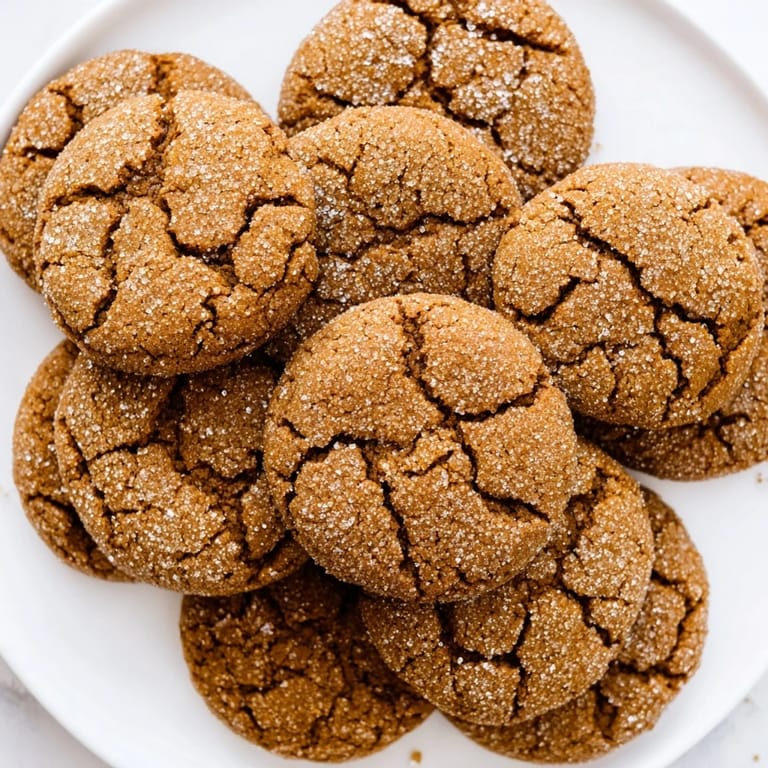
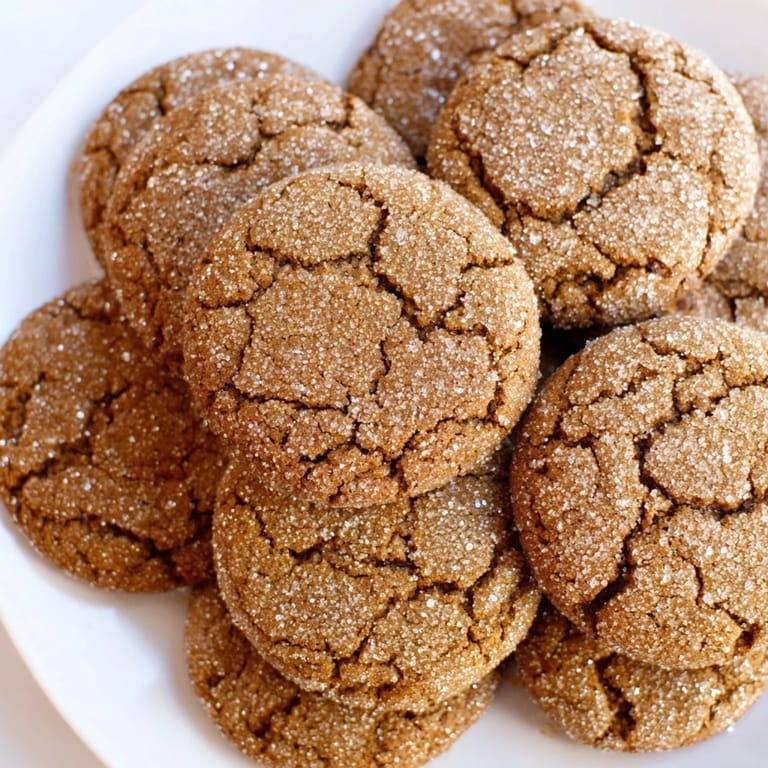
- Granulated sugar (1/4 cup for rolling): This catches light and sparkle on top while adding textural contrast to the chewy interior.
Tired of Takeout? 🥡
Get 10 meals you can make faster than delivery arrives. Seriously.
One email. No spam. Unsubscribe anytime.
Instructions
- Set yourself up for success:
- Preheat your oven to 350°F and line two baking sheets with parchment paper—this prevents sticking and ensures your bottom edges won't burn. Having everything ready before you start mixing means you won't have a warm bowl of dough waiting around while you search for parchment paper.
- Whisk the dry team together:
- In a medium bowl, combine flour, ginger, cinnamon, cloves, nutmeg, baking soda, and salt with a few good whisks; this distributes the leavening and spices evenly so you don't get surprise pockets of baking soda flavor. Set this aside and breathe in the spice cloud.
- Cream butter and brown sugar until fluffy:
- In a large bowl, beat softened butter and packed brown sugar for about 2–3 minutes with an electric mixer until the mixture is noticeably lighter and fluffy; this incorporates air that helps the cookies rise and creates tenderness. You'll know it's ready when it looks almost like wet sand that's been lightened a few shades.
- Add the wet ingredients:
- Mix in molasses, egg, and vanilla extract until everything is well combined and you can't see any streaks of molasses anymore. The mixture might look a little separated at first, but keep mixing and it will come together into a glossy dough.
- Fold in the dry ingredients:
- Add the whisked dry mixture to the wet mixture and stir just until combined; overmixing develops gluten, which makes cookies tough instead of tender. Stop when you don't see any white flour streaks—a few tiny lumps are perfectly fine and actually preferable.
- Scoop and roll:
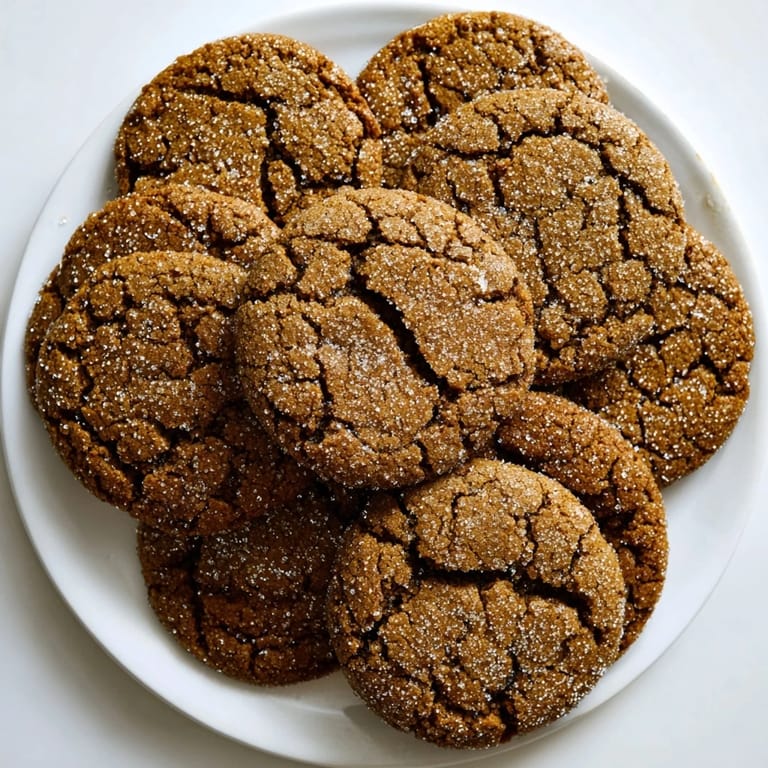
- Using a tablespoon or small scoop, portion the dough into balls and roll each one in granulated sugar to coat; this creates that sparkly, crackled exterior that catches your eye on the cooling rack. Your hands will get sticky, and that's normal—a damp paper towel nearby helps.
- Arrange with intention:
- Place dough balls about 2 inches apart on your prepared baking sheets; these cookies will spread slightly, so don't crowd them or they'll merge into one giant cookie (which sounds delicious but isn't the goal here).
- Bake until just set:
- Bake for 9–11 minutes, watching until the edges look set and slightly firm but the centers still jiggle just a tiny bit when you gently shake the pan. The centers will continue cooking on the hot pan after they come out, so resist the urge to bake them until they're completely firm or they'll be hard instead of chewy.
- Cool with patience:
- Let the cookies cool on the baking sheet for 5 minutes so they set up enough to move safely, then transfer them to a wire cooling rack for complete cooling. That moment when you pick up a slightly warm cookie and it bends without breaking is when you know you've nailed it.
 Pin Now
 The first time I gave these to someone I was trying to impress, they took one bite and closed their eyes—just for a second, but long enough that I knew the recipe had done its job. There's something about a truly good cookie that makes people pause and actually taste it instead of just eating it mindlessly. That moment reminded me why I keep making them.
Why These Cookies Became a Tradition
Molasses cookies have a quiet, unpretentious charm that somehow works year-round even though they scream 'holidays' the moment someone smells them. They're humble enough for a weeknight treat but impressive enough to bring to gatherings, which is a surprisingly rare combination. The fact that they come together so quickly means you can actually bake them when the craving strikes instead of just thinking about them wistfully.
The Spice Balance That Took Me Years to Understand
I used to think that adding more spices meant a spicier cookie, so I'd dump in extra cinnamon and ginger until they tasted medicinal. Then a friend pointed out that the spices in this recipe are actually quite delicate and balanced—ginger provides warmth, cinnamon adds sweetness, cloves bring earthiness, and nutmeg ties it all together. Now when I make them, I actually taste each spice as a separate note instead of a generic 'warm cookie' flavor. It's the difference between cooking and actually paying attention while you cook.
Variations Worth Experimenting With
The base recipe is solid, but these cookies welcome experimentation once you've made them exactly as written at least once. I've added crystallized ginger for extra chew, a pinch of black pepper for subtle heat, and even swapped half the butter for vegetable shortening when I wanted a slightly different texture. Some bakers will tell you there's only one right way to make anything, but I've found that cookies are actually forgiving teachers if you listen to what's happening in the oven.
- For deeper molasses flavor, use blackstrap molasses, though it will make the dough noticeably darker and slightly more intense.
- A handful of finely chopped crystallized ginger stirred into the dough at the last moment creates chewy pockets of extra spice throughout.
- Enjoy them warm with a cup of hot tea, spiced cider, or black coffee—pairing matters more than people realize.
 Pin Now
 These molasses cookies have quietly become one of those recipes that feels like home in edible form, the kind of thing people ask you to make every single time you offer. There's real magic in that, and it comes from respecting the recipe enough to follow it closely the first time, then trusting yourself to play with it once you understand how it works.
Recipe FAQs
- → How do I achieve a chewy texture in these molasses cookies?
Baking the cookies until the edges are set but centers remain soft helps maintain chewiness. Slightly underbaking enhances this texture.
- → Can I add extra spice to the dough?
Yes, incorporating a pinch of black pepper or increasing ginger and cinnamon can add a subtle or bold spicy kick.
- → What is the purpose of rolling the dough balls in granulated sugar?
Rolling in granulated sugar creates a sweet, slightly crunchy outer layer that contrasts the soft interior.
- → Are there any suggested ingredient swaps for different texture?
Replacing half the butter with vegetable shortening can result in a slightly different, tender texture.
- → How should I store these molasses cookies?
Store in an airtight container at room temperature for up to a week to preserve softness and flavor.