 Pin Now
 There's something about the smell of cinnamon and butter hitting the oven that takes me back to afternoons in my kitchen when I was learning to bake. Snickerdoodles were never meant to be fancy—just simple, soft cookies with that surprising tangy bite from cream of tartar—but somehow they became the thing I made when I wanted to feel like I was doing something right. The first batch I made, I forgot the cinnamon sugar coating entirely and only realized halfway through baking. Now I make them all the time, and that mistake taught me the importance of reading everything twice.
I made these for my neighbor last winter when she was going through a rough patch, and she sat at my kitchen table eating warm cookies straight from the cooling rack while we talked about everything and nothing. She came back the next week specifically to ask how I made them so soft, and I realized that sometimes the best recipes are the ones that give people permission to sit down and take a break.
Ingredients
- All-purpose flour (2 3/4 cups): The foundation that keeps these cookies from spreading too thin; don't sift unless your flour is particularly clumpy.
- Cream of tartar (2 teaspoons): This is the secret ingredient that gives snickerdoodles their distinctive tang and helps them stay tender; it's not optional, and there's no real substitute.
- Baking soda (1 teaspoon): Works with the cream of tartar to lift the cookies slightly and create that soft, pillowy texture.
- Salt (1/2 teaspoon): A tiny amount that makes everything taste more like itself.
- Unsalted butter (1 cup, softened): Room temperature is non-negotiable here; cold butter won't cream properly and you'll end up with dense cookies.
- Granulated sugar (1 1/2 cups): The bulk of the sweetness that gets creamed into the butter for a light, fluffy base.
- Large eggs (2): Add them one at a time so they emulsify properly into the butter mixture.
- Pure vanilla extract (1 teaspoon): Don't skip this; it rounds out all the flavors beautifully.
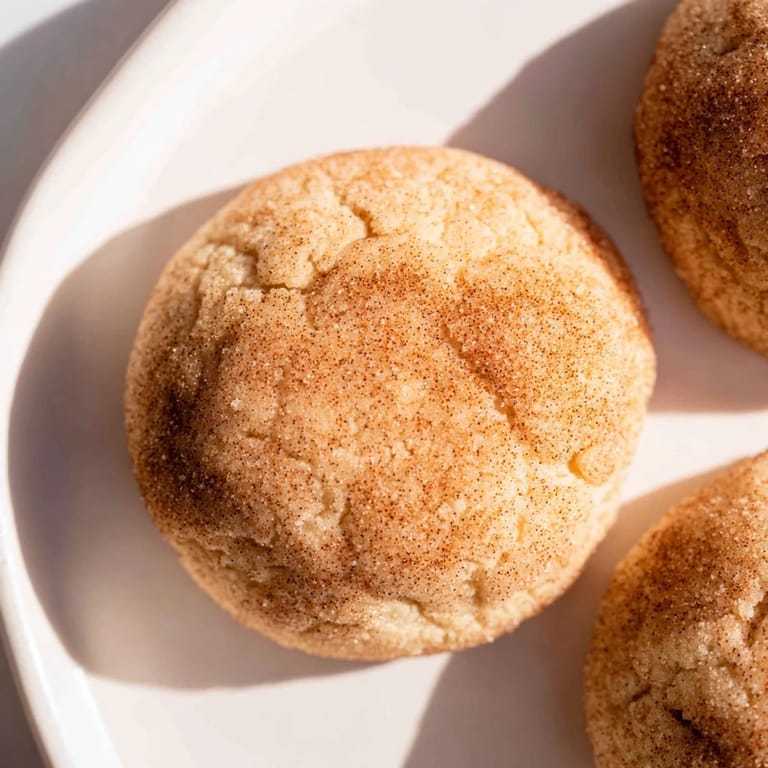
- Cinnamon sugar coating (1/4 cup sugar mixed with 2 teaspoons cinnamon): The signature finish that makes these recognizable from across the room.
Tired of Takeout? 🥡
Get 10 meals you can make faster than delivery arrives. Seriously.
One email. No spam. Unsubscribe anytime.
Instructions
- Get your oven ready:
- Preheat to 375°F and line two baking sheets with parchment paper so your cookies don't stick and bake evenly. This step takes two minutes but saves you from disaster later.
- Combine the dry ingredients:
- Whisk the flour, cream of tartar, baking soda, and salt together in a medium bowl and set it aside. This ensures everything is evenly distributed and prevents lumps.
- Cream the butter and sugar:
- In a large bowl, beat the softened butter with 1 1/2 cups of sugar for about 2 to 3 minutes until it's pale and fluffy. You'll know it's ready when it looks like clouds and feels lighter than when you started.
- Add the eggs and vanilla:
- Drop in one egg, beat it in completely, then add the second egg the same way. Pour in the vanilla extract and mix until everything is smooth and cohesive.
- Bring the dough together:
- Gradually add your dry mixture to the wet mixture, stirring just until combined. Don't overmix; stop as soon as you don't see any flour streaks.
- Make the cinnamon sugar coating:
- Stir together 1/4 cup sugar and 2 teaspoons of cinnamon in a small bowl and have it ready on the counter.
- Shape and coat:
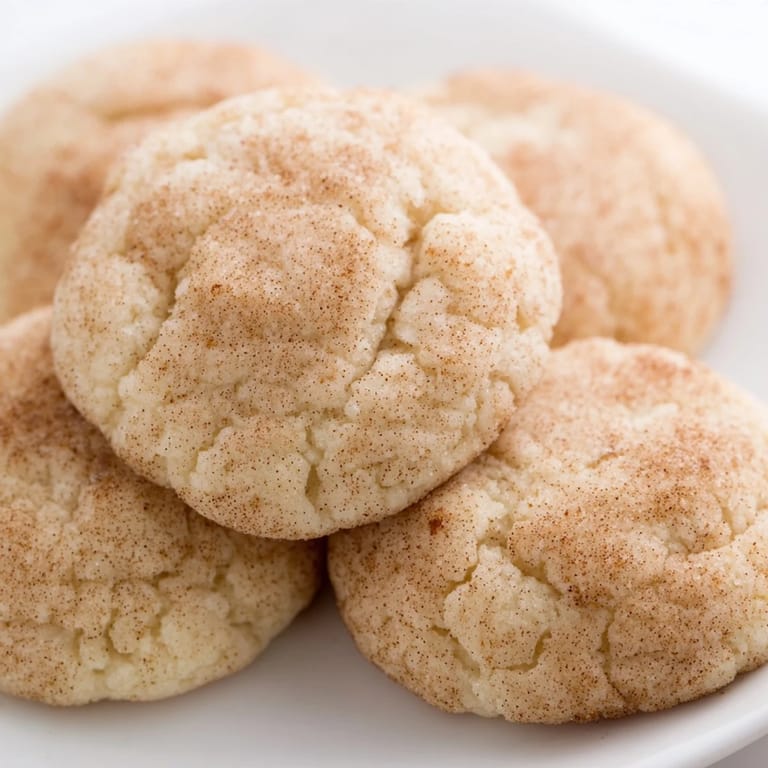
- Scoop tablespoon-sized portions of dough with your hands or a small cookie scoop, roll each one into a ball, and then roll it in the cinnamon sugar until it's evenly coated. The coating sticks better when your hands are slightly damp.
- Space them properly:
- Place each dough ball about 2 inches apart on your prepared baking sheets so they have room to spread without touching.
- Bake until golden:
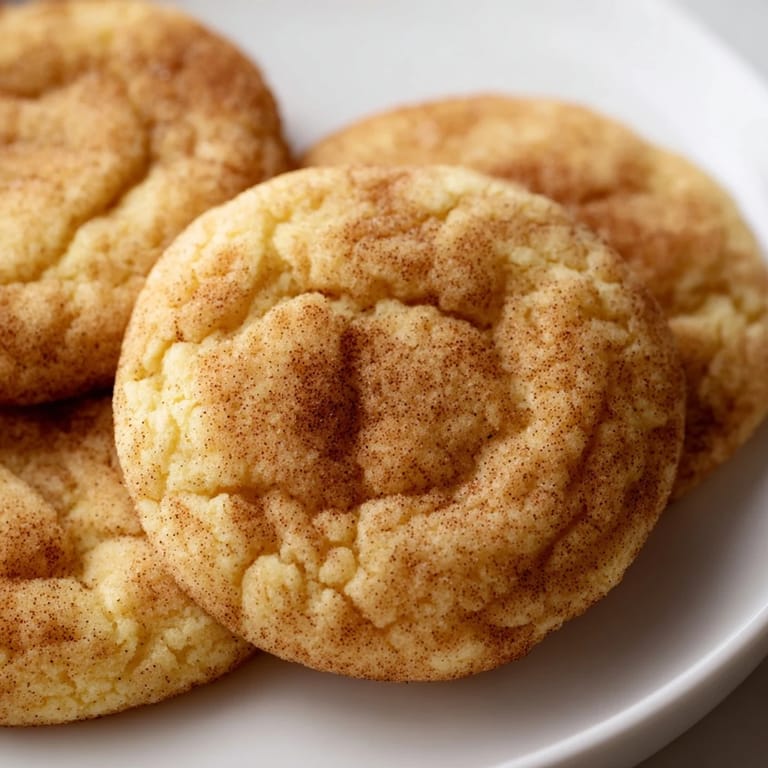
- Bake for 9 to 11 minutes, watching for the moment when the edges look set but the centers still jiggle slightly when you shake the pan. This is the magic that keeps them soft inside.
- Cool with patience:
- Let the cookies rest on the baking sheet for 5 minutes to set up, then transfer them to a wire rack to cool all the way down. They'll continue to firm up as they cool.
 Pin Now
 One afternoon, my daughter came home from school and just sat down without saying anything, and I knew exactly what to do—pull out the snickerdoodles from yesterday and warm them up in the microwave for 15 seconds. She bit into one and suddenly we could talk about whatever was bothering her. Food shouldn't have to fix everything, but sometimes a soft cookie and a moment of quiet presence is exactly what someone needs.
Why Cream of Tartar Matters
Cream of tartar is an acid that reacts with baking soda to create lift and tenderness in baked goods. In snickerdoodles specifically, it's what gives them their distinctive slightly tangy flavor that you can't quite put your finger on. I learned this the hard way when I tried to make them without it once—they tasted flat and one-dimensional, and I immediately understood why this ingredient has been in the recipe for generations. You can't replace it with baking powder or anything else; it genuinely changes the chemistry of the cookie.
Storage and Keeping
These cookies stay soft for about five days in an airtight container, which is longer than they usually last in my house. I learned to keep them in a container with a slice of bread—the cookies absorb moisture from the bread and stay even softer, while the bread gets hard (which you can toast or discard). If you find them getting stale before you finish them, warming them in the microwave for about 15 seconds brings them right back to life.
Customizing Your Snickerdoodles
The beauty of snickerdoodles is how simple they are, which means small changes create noticeable differences. Some bakers swear by replacing half the butter with shortening for extra puff, though I prefer the flavor that all-butter gives. You can also play with the cinnamon sugar coating—some people add a tiny pinch of nutmeg, others use Ceylon cinnamon for a subtler, sweeter flavor. Here are a few more ways to make them your own:
- Brown a tablespoon of the butter before creaming it with the rest for a deeper, nuttier flavor.
- Add a quarter teaspoon of almond extract along with the vanilla for a haunting, sophisticated undertone.
- Roll the dough balls in the cinnamon sugar and then let them rest in the fridge for 30 minutes before baking for less spread and more height.
 Pin Now
 These cookies have taught me that sometimes the most memorable food is the simplest, the kind that doesn't try to impress but somehow ends up feeding something deeper. They're still the first thing I reach for when I want to bake something that matters.
Recipe FAQs
- → What gives snickerdoodles their signature tang?
Cream of tartar provides the subtle tanginess that distinguishes snickerdoodles from other sugar cookies.
- → How can I achieve extra-soft texture in these cookies?
Slightly underbaking and allowing the cookies to cool completely helps maintain a soft and pillowy texture.
- → Can I substitute butter with another fat?
Using half butter and half shortening can create a puffier texture while retaining flavor.
- → What is the best way to coat these cookies evenly?
Rolling dough balls in a mixture of granulated sugar and ground cinnamon ensures an even, flavorful coating.
- → How should I store snickerdoodle cookies to keep them fresh?
Store cookies in an airtight container at room temperature for up to five days to maintain softness.