 Pin Now
 There's something about the smell of butter creaming with sugar that makes me lose track of time in the kitchen. My grandmother used to make these thumbprint cookies every December, and I'd watch her press each indentation with this practiced flick of her thumb, like she was signing her name on every single one. The first time I tried making them myself, I was shocked at how simple they were—just a few ingredients and pure, tender shortbread that melts on your tongue. Years later, I still think of her kitchen when I bake these, though now I've added my own twist with different jams depending on what's calling to me that day.
I remember bringing these to a potluck once where everyone else had store-bought desserts, and they disappeared before anything else. One woman asked for the recipe right there at the table, and when I told her how simple it was, she looked almost offended—she'd been certain they were complicated. That moment stuck with me, because it's the best kind of cooking magic: taking the most basic ingredients and turning them into something that feels like it came from somewhere fancy.
Ingredients
- Unsalted butter, softened: The foundation of tender shortbread, and softening it beforehand saves you from overworking the dough later.
- Granulated sugar: Keep it standard here—no need to experiment with other sugars unless you're feeling adventurous.
- Egg yolks: They bind everything together and add richness without making the cookies cake-like.
- Vanilla extract: A teaspoon is all you need to add warmth and depth without overwhelming the butter.
- All-purpose flour: This is the structure, so measure it carefully by spooning into the cup, not scooping straight from the bag.
- Fine sea salt: A pinch balances the sweetness and makes the butter flavor shine.
- Fruit jam or preserves: This is where you can play—raspberry and apricot are classic, but I've had success with fig, blackberry, even a good quality marmalade.
Tired of Takeout? 🥡
Get 10 meals you can make faster than delivery arrives. Seriously.
One email. No spam. Unsubscribe anytime.
Instructions
- Set your oven and prepare:
- Preheat to 350°F and line your baking sheets with parchment paper so the cookies slide off easily without sticking.
- Cream the butter and sugar:
- Beat them together until the mixture turns pale and fluffy—this takes about 2 to 3 minutes with an electric mixer, or about 5 minutes if you're using a wooden spoon and some elbow grease. You want to see air incorporated into the butter, which makes the cookies tender.
- Add the egg yolks and vanilla:
- Mix these in until they're completely combined with no streaks of yolk visible. This happens faster than you'd think.
- Fold in the flour and salt:
- Stir gently just until the dough comes together—don't overmix or the cookies will be tough. The dough should feel soft and slightly sticky.
- Shape the dough:
- Roll tablespoon-sized pieces between your palms into 1-inch balls and arrange them 2 inches apart on the baking sheets. If the dough gets sticky, chill your hands in cold water.
- Make the thumbprint:
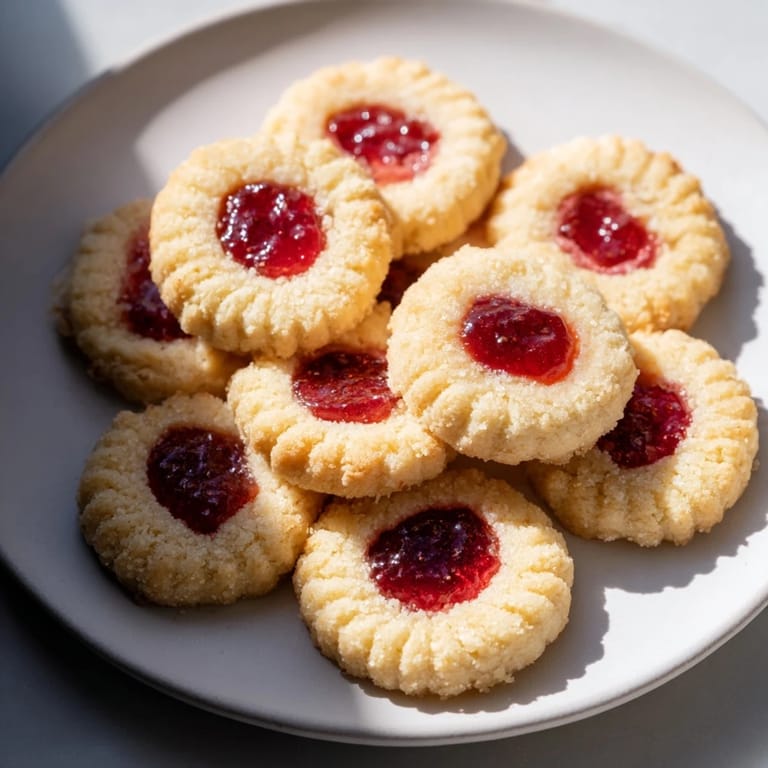
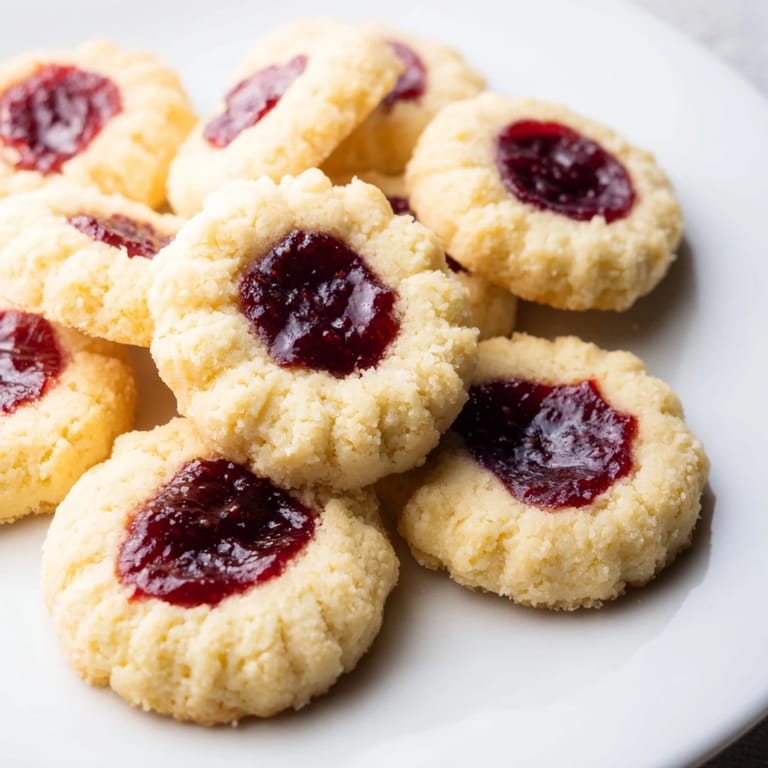
- Press your thumb gently into the center of each ball, twisting slightly to create a shallow well. You can also use the back of a teaspoon if your thumbprint is too deep.
- Fill with jam:
- Drop about 1/2 teaspoon of jam into each indent—not too much or it'll spill over during baking and caramelize onto the sheet.
- Bake until golden:
- Watch for about 12 to 15 minutes until the edges turn light golden brown but the centers stay soft. The bottoms should be barely colored.
- Cool properly:
- Let the cookies rest on the baking sheet for 5 minutes so they set slightly, then transfer them to a wire rack. They'll continue to cook a little from residual heat.
 Pin Now
 My dad once made a batch of these with homemade blackberry jam he'd made in August, and we ate so many of them that evening that we had to lie down on the kitchen floor laughing about how we'd overdone it. It wasn't fancy or complicated, but it became one of those memories that feels sacred now—just butter, sugar, and the kind of contentment that only homemade cookies can bring.
Jam Selection and Flavor Pairing
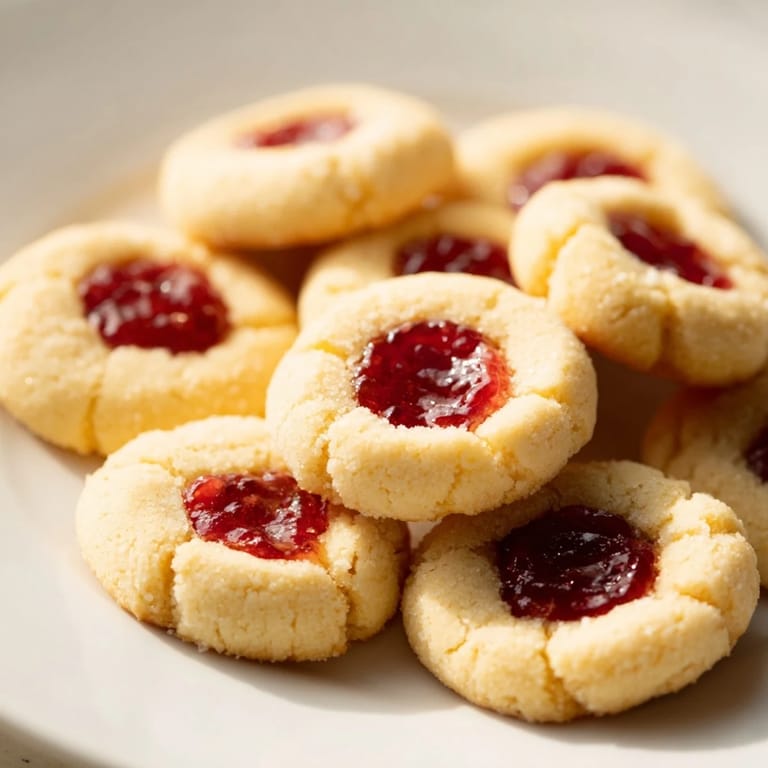
The beauty of thumbprint cookies is that they're a blank canvas for whatever jam speaks to you. I've found that seedless raspberry and apricot are the most reliably delicious, but strawberry is lovely and nostalgic, while darker preserves like blackberry or cherry add sophistication. If you're feeling bold, try a small jar of something unusual—quince paste, plum, or even a good quality marmalade will surprise you in the best way. The contrast between the buttery, neutral shortbread and whatever fruity burst you choose is what makes these cookies so special.
Storage and Keeping
These cookies stay fresh in an airtight container at room temperature for up to a week, though they rarely last that long in my house. If you want to make them ahead, you can freeze the baked cookies for up to three months, and they thaw at room temperature in about an hour. I sometimes freeze the unbaked balls of dough and bake them straight from the freezer, adding just a minute or two to the baking time—this makes it easy to have fresh cookies whenever unexpected guests arrive.
Making Them Your Own
Once you master the basic recipe, the variations are endless and honestly more fun than sticking to tradition. Some people roll the dough balls in finely chopped nuts, sprinkle with sea salt, or dust with cinnamon sugar before baking for extra texture and flavor. You could brush the baked cookies with a thin glaze while they're still warm, or sandwich two cookies together with jam for something more indulgent. The shortbread dough is forgiving enough that you can experiment without worrying you'll ruin a batch.
- Try rolling dough balls in finely chopped pistachios, almonds, or hazelnuts before pressing the thumbprint for a nutty crunch.
- Brush warm cookies with a vanilla glaze or dust them with powdered sugar for extra elegance.
- Use two different jams in different batches and arrange them on a platter for a beautiful, varied presentation.
 Pin Now
 These thumbprint cookies are the kind of recipe that stays with you—simple enough to make on a Tuesday afternoon, but special enough to feel like a gift when you share them. There's something deeply satisfying about making something so beautiful with your own hands.
Recipe FAQs
- → What type of jam works best for filling?
Fruit jams like raspberry, apricot, or strawberry each offer a sweet balance that complements the rich dough perfectly.
- → How can I make the shortbread more flavorful?
Adding vanilla extract enriches the dough’s aroma, and rolling in finely chopped nuts before baking adds texture and a nutty note.
- → What’s the best way to shape the cookies?
Rolling dough into 1-inch balls and pressing gently with a thumb or spoon creates the perfect well for filling.
- → Can these be made ahead of time?
Yes, they keep well in an airtight container for up to one week while preserving their tender texture.
- → What oven temperature is ideal for baking?
Baking at 350°F (175°C) until edges turn just golden ensures a soft crumb with a slight crispness outside.