 Pin Now
 There's a particular moment I chase every time I make Tom Kha Gai—that first inhale when the lemongrass hits the simmering broth and your kitchen fills with something that smells like a Thai market and comfort all at once. My neighbor stopped by one evening while I was making this, and she literally stood in my doorway for ten minutes just breathing it in before I even offered her a bowl. That's when I realized this soup isn't just dinner; it's an experience that starts the moment you light the stove.
I made this for a small dinner party last winter, and watching everyone pause mid-conversation after that first spoonful was oddly gratifying. One guest asked if I'd trained in Thailand, which made me laugh—I'd learned everything from trial and error, and honestly, from burning a batch of aromatics and starting over. But that mistake taught me patience, and now I know exactly when the broth smells ready to receive the coconut milk.
Ingredients
- Boneless, skinless chicken breast (400 g): Slicing it thin means it cooks fast and absorbs all that aromatic broth—don't skip the slicing step, as it changes everything about the texture.
- Chicken stock (800 ml): Use good stock; it's the foundation, and watery stock makes watery soup.
- Coconut milk, full-fat (400 ml): This is non-negotiable—the cream is what makes it rich, and low-fat versions disappoint.
- Lemongrass (2 stalks): Trim the dry tops and smash it hard on your cutting board; this releases all the volatile oils that make your kitchen smell incredible.
- Kaffir lime leaves (4): Their citrusy bite is distinct from lime juice—if you can't find them, lime zest works but tastes slightly different.
- Galangal (3 slices): It's spicier and more floral than ginger, but ginger absolutely works if that's what you have on hand.
- Thai bird's eye chilies (3): Crush them rather than slice them so the heat spreads evenly through the soup—and taste as you go because these are no joke.
- Garlic (4 cloves) and shallots (4 small): Smashing and slicing them releases their sweetness into the broth without making it muddy.
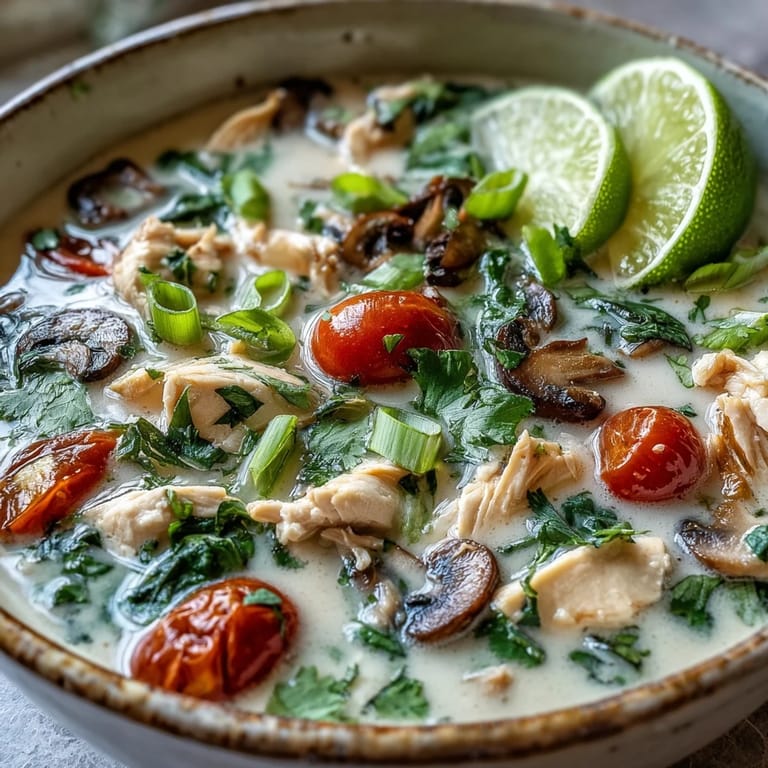
- Oyster or white mushrooms (200 g): Slice them thick enough that they hold their shape but thin enough to cook through—undercooked mushrooms feel rubbery.
- Cherry tomatoes (100 g): Halving them lets them soften gently without falling apart completely.
- Fish sauce (2 ½ tbsp): I know it smells funky in the bottle, but trust it—it's the secret umami layer that makes everything taste more like itself.
- Fresh lime juice (1 ½ tbsp): Squeeze it fresh; bottled tastes tinny and flat.
- Palm sugar (1 tsp): Light brown sugar works if that's all you have, but palm sugar has this subtle depth that rounds out the spice.
Tired of Takeout? 🥡
Get 10 meals you can make faster than delivery arrives. Seriously.
One email. No spam. Unsubscribe anytime.
Instructions
- Build Your Aromatic Base:
- Bring your chicken stock to a gentle boil in a large saucepan, then add the smashed lemongrass, torn kaffir lime leaves, galangal slices, crushed chilies, smashed garlic, and sliced shallots all at once. Let this simmer for exactly 5 minutes—you'll see the broth deepen in color and smell like you've opened a window to Thailand.
- Cook the Chicken Through:
- Add your thinly sliced chicken breast to the infused broth and immediately turn the heat down to a gentle simmer. In 5 to 7 minutes, the chicken will turn opaque and cooked through; overcooking makes it stringy, so stay present and don't wander off.
- Marry with Coconut Cream:
- Pour in the full-fat coconut milk slowly while stirring gently—you're creating a marriage of flavors here, not forcing them together. Add the sliced mushrooms and halved tomatoes, then simmer for another 5 minutes until they're just tender.
- Season to Your Taste:
- Add the fish sauce, fresh lime juice, palm sugar, and salt, then taste a small spoonful. This is your moment to adjust—if it tastes too salty, add more lime; if too sour, a pinch more sugar balances it. Trust your palate.
- Finish and Serve:
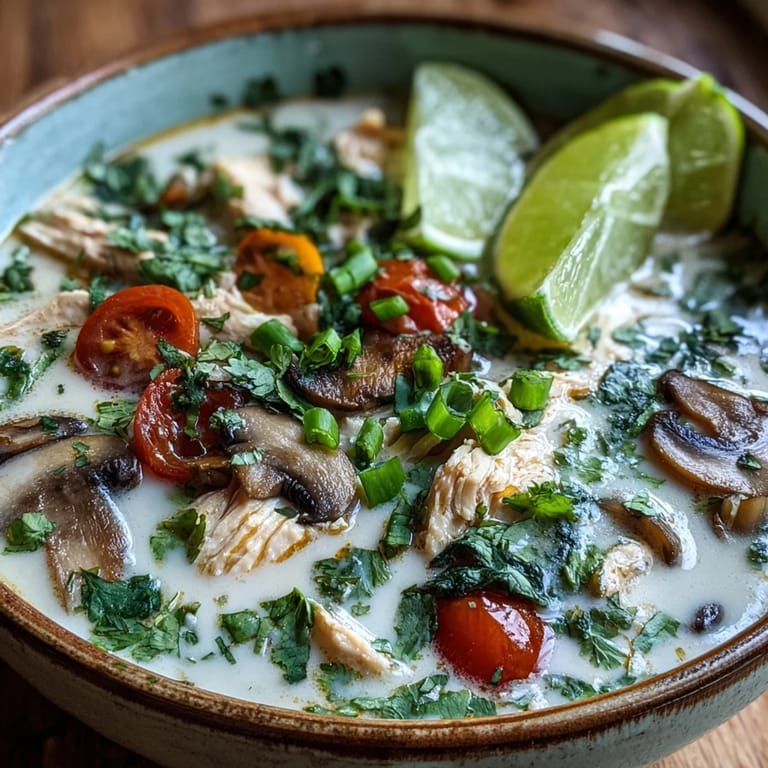
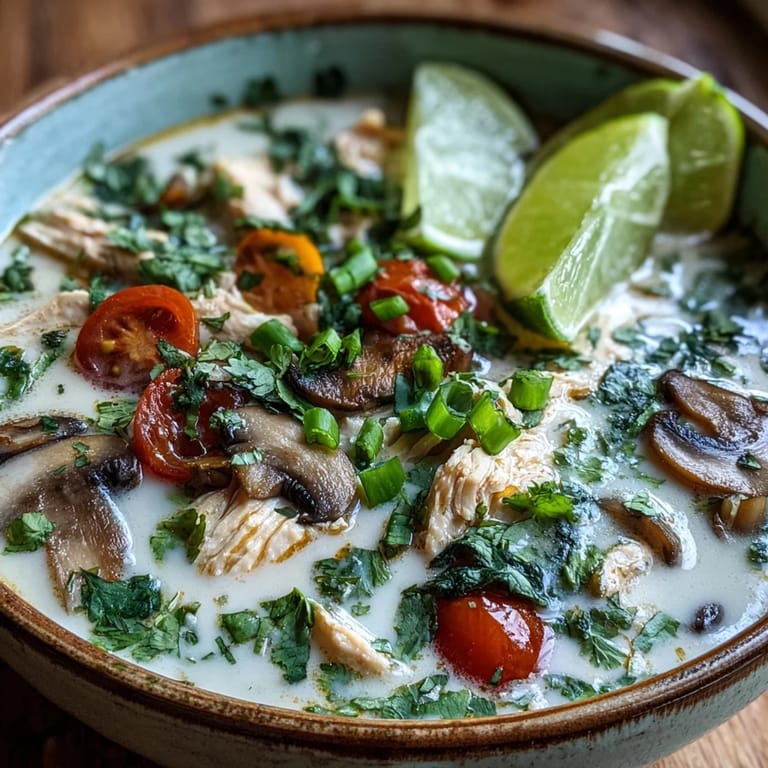
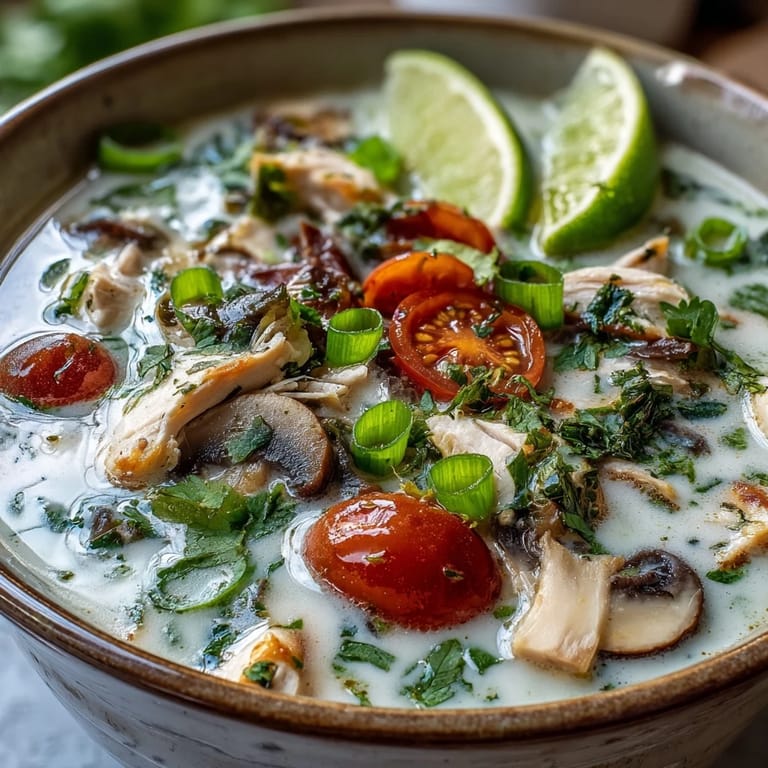
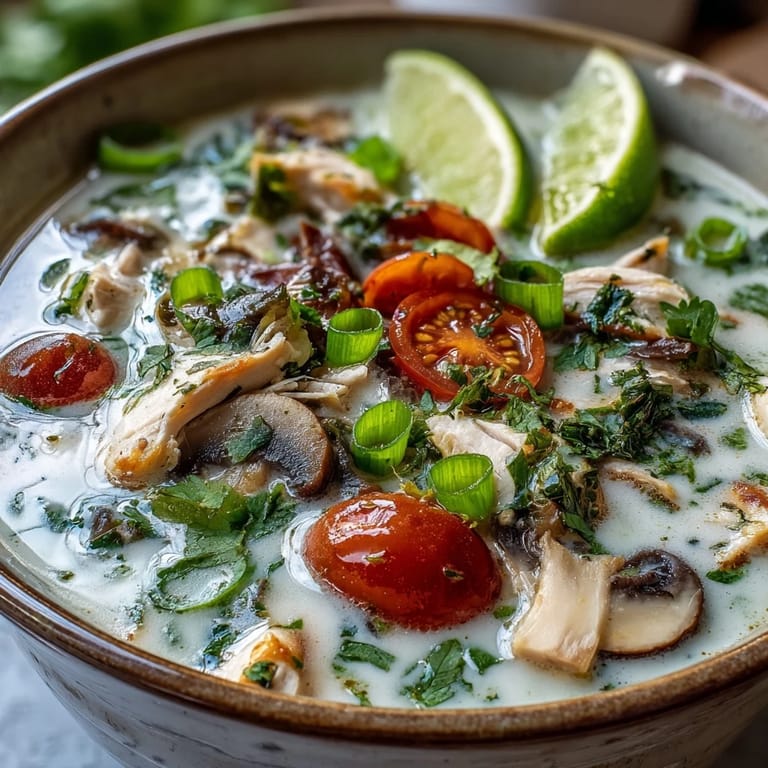
- If you prefer a cleaner presentation, fish out the large aromatic pieces with a slotted spoon—though some prefer leaving them in for continued flavor. Ladle into bowls and scatter cilantro, green onions, lime wedges, and extra chili on top.
 Pin Now
  Pin Now
 The first time someone told me this soup reminded them of being cared for, I understood why I kept making it. It's got this quality that makes people slow down, breathe, and ask for seconds without hesitation.
The Aromatics Make the Whole Thing
I used to skip the smashing and slicing step and just drop whole pieces in, thinking it didn't matter. It did. When you smash lemongrass or split garlic cloves, you're breaking cell walls and releasing essential oils that infuse the broth in minutes instead of hours. The difference between a soup that tastes Thai and one that just tastes like chicken soup with random ingredients is in how you treat those aromatics—they deserve respect and a little violence from your knife.
Why Full-Fat Coconut Milk Matters
I once tried to cut calories and used light coconut milk, and it tasted thin and watery no matter what else I adjusted. The richness of Tom Kha Gai comes from that creamy coconut layer, and there's no ingredient that can replace it or fake it. Full-fat isn't just a suggestion here—it's what separates this soup from something you could make with cream and feel like you'd cheated the recipe of its soul.
Customizing Heat and Flavor Balance
This soup teaches you something important if you pay attention: every element has a volume dial. Too spicy and you can't taste the herbs; too sour and the creaminess disappears; too fishy and you've crossed into polarizing territory. The joy of Tom Kha Gai is learning your own balance, and once you do, you own the recipe instead of just following it.
- Start with 2 chilies instead of 3 if you're unsure about your heat tolerance, then add more next time.
- Taste before serving and adjust each seasoning independently—often it's just a touch more lime or a whisper of sugar that changes everything.
- Keep extra lime wedges at the table so people can brighten their bowl to their liking.
 Pin Now
  Pin Now
 This soup has become my answer to almost everything: when someone's under the weather, when I want to feel like I've traveled without leaving my kitchen, when I need to feed people and have them actually remember it. Make it once and you'll understand why.
Recipe FAQs
- → Can I substitute galangal with ginger?
Yes, fresh ginger works as a substitute for galangal, though the flavor will be slightly different. Galangal has a sharper, more citrusy note while ginger is warmer and spicier.
- → Where can I find kaffir lime leaves?
Kaffir lime leaves are available at Asian grocery stores, often in the freezer section. You can substitute with lime zest if unavailable, though the authentic flavor will differ.
- → How do I prevent the coconut milk from curdling?
Keep the heat at a gentle simmer after adding coconut milk and avoid boiling. Stir gently and add the coconut milk after the broth has cooled slightly from a rolling boil.
- → Can I make this soup ahead of time?
Yes, Tom Kha Gai can be prepared ahead and refrigerated for up to 3 days. The flavors often deepen overnight. Reheat gently and add fresh lime juice and herbs before serving.
- → What can I use instead of fish sauce?
For vegetarian versions, use soy sauce or tamari. Start with less than the fish sauce amount and adjust to taste, as these alternatives can be saltier.
- → How spicy is this soup?
The spice level depends on the quantity of Thai bird's eye chilies used. Start with 1-2 chilies for mild heat, or omit them entirely for a non-spicy version. You can always add more at the table.