 Pin Now
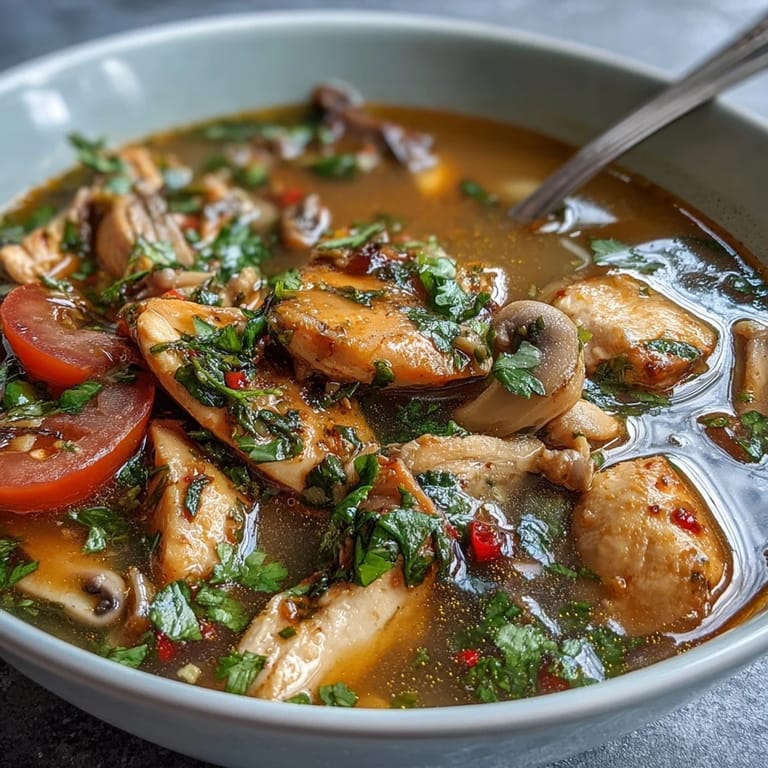
 A few years back, I was sitting in a cramped Bangkok street stall at dusk, watching a vendor stir an enormous pot of tom yum gai with the kind of casual confidence that only comes from making the same soup three hundred times a week. The steam hit my face before the flavors did, and I realized right then that this wasn't just soup—it was a conversation between heat, acid, and aromatics that somehow always knew exactly what to say. When I tried making it at home months later, my kitchen smelled so alive that my neighbor actually knocked to ask if something was burning, which should tell you everything about how bold this dish gets.
I made this for my best friend on a rainy Tuesday when she called saying she had a cold and I wanted her to feel something other than miserable. She sat at my kitchen counter in an oversized sweater, and I watched her eyes water—partly from the chiles, mostly from the love of it—and she said it tasted like she could finally breathe again. That's the thing about tom yum gai: it doesn't whisper, and somehow that's exactly what people need sometimes.
Ingredients
- Chicken breast or thighs (350g): Slice thin so it cooks in seconds and stays tender; thighs are more forgiving if you're nervous about drying them out.
- Chicken stock (1.2L): Use homemade if you have it, but good quality store-bought works fine—this broth will carry everything else.
- Lemongrass (2 stalks): Smash it first to bruise the fibers and release that citrusy ghost that makes people ask what you're cooking from three rooms away.
- Kaffir lime leaves (5 leaves): Don't skip these if you can find them; they're the difference between pretty good and unforgettable.
- Galangal (3 slices): If you can't locate it, fresh ginger works, though galangal has an earthier, slightly piney quality that's its own thing.
- Thai bird's eye chiles (2 whole): Smash them to release heat without cooking them apart; adjust based on your crowd's tolerance and your mood.
- Mushrooms (150g): Oyster mushrooms absorb broth like little sponges, but button mushrooms are easier to find and still delicious.
- Tomatoes (2 medium): Cut into wedges so they soften and release juice into the broth while keeping some shape.
- Onion (1 small): Slice thin so it softens quickly without overpowering the delicate aromatics around it.
- Nam prik pao (2 tbsp): This roasted chili paste is the secret backbone that makes everything taste like restaurant-level tom yum; keep a jar in your pantry forever.
- Fish sauce (2 tbsp): It smells funky in the bottle but becomes the savory soul of this soup once it hits the heat.
- Sugar (1 tbsp): Just enough to round out the spicy-sour without making it sweet; trust the balance.
- Salt (½ tsp): Taste as you go because every stock is salted differently.
- Lime juice (2 tbsp fresh): Squeeze it right before serving so it stays bright and sharp.
- Fresh cilantro (2 tbsp): Chop it just before plating so it doesn't bruise and lose its fresh edge.
Tired of Takeout? 🥡
Get 10 meals you can make faster than delivery arrives. Seriously.
One email. No spam. Unsubscribe anytime.
Instructions
- Build your aromatic base:
- Bring the stock to a gentle boil in a large saucepan, then add lemongrass, kaffir lime leaves, galangal, and smashed chiles. Let this simmer quietly for 5 minutes, and your kitchen will start smelling like the trip you're about to take with every spoonful.
- Cook the chicken gently:
- Add your sliced chicken and simmer for just 3–4 minutes until it's no longer pink and the edges curl slightly. Skim away any foam that rises because it keeps the broth clear and beautiful.
- Add vegetables with intention:
- Drop in mushrooms, tomato wedges, and onion slices, then simmer another 3–4 minutes until the vegetables are tender but still have character. This is where the soup becomes a full meal.
- Season with balance:
- Stir in nam prik pao, fish sauce, sugar, and salt, then let it warm through for 2 minutes so everything gets to know each other. Taste as you go because you're building a flavor, not following a formula.
- Finish with brightness:
- Remove from heat and pour in your fresh lime juice—this is the final note that makes everything sing and keeps the soup from feeling heavy. Taste again and adjust sour or salt because this is your bowl to own.
- Serve with ceremony:
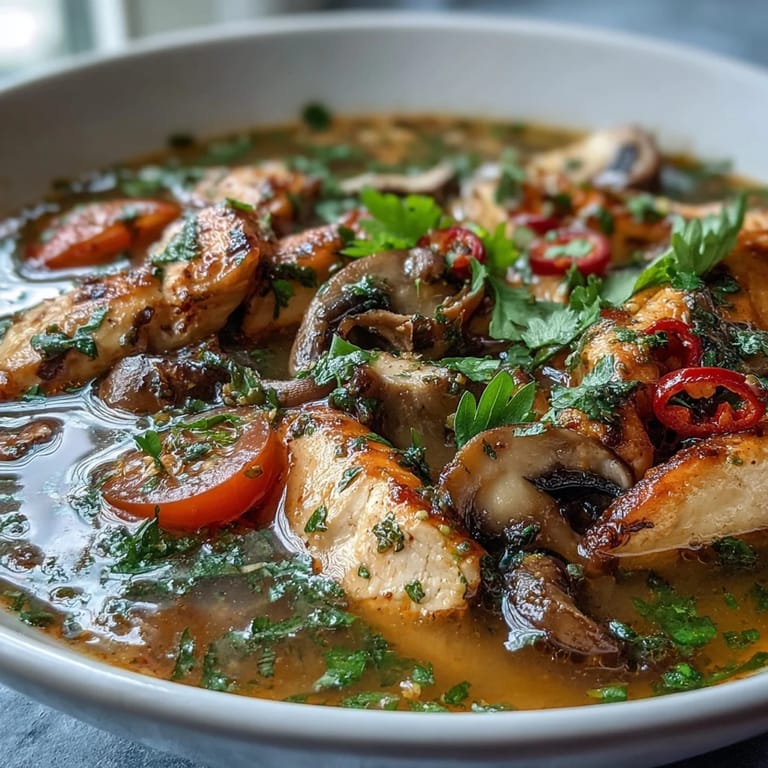
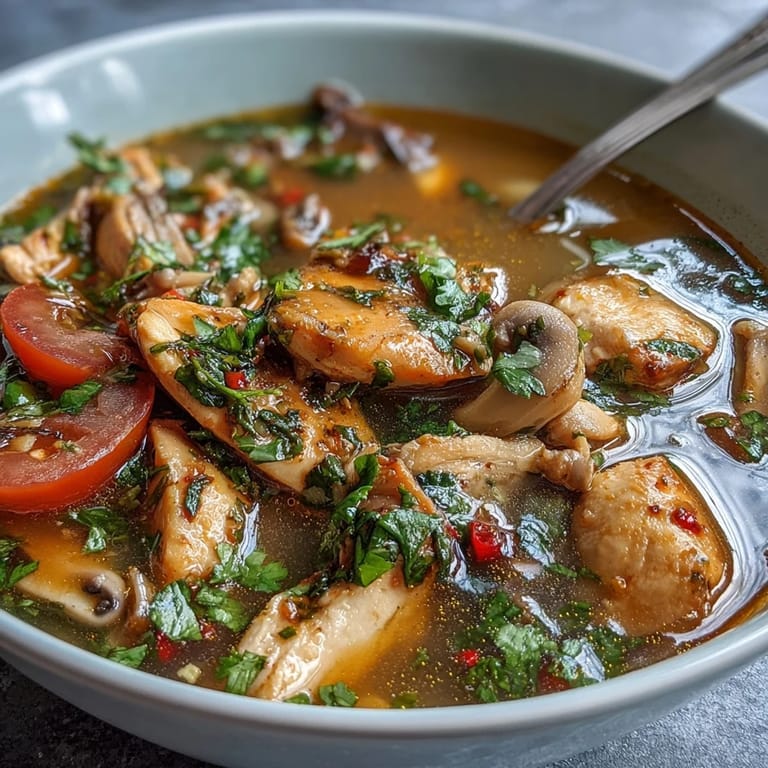
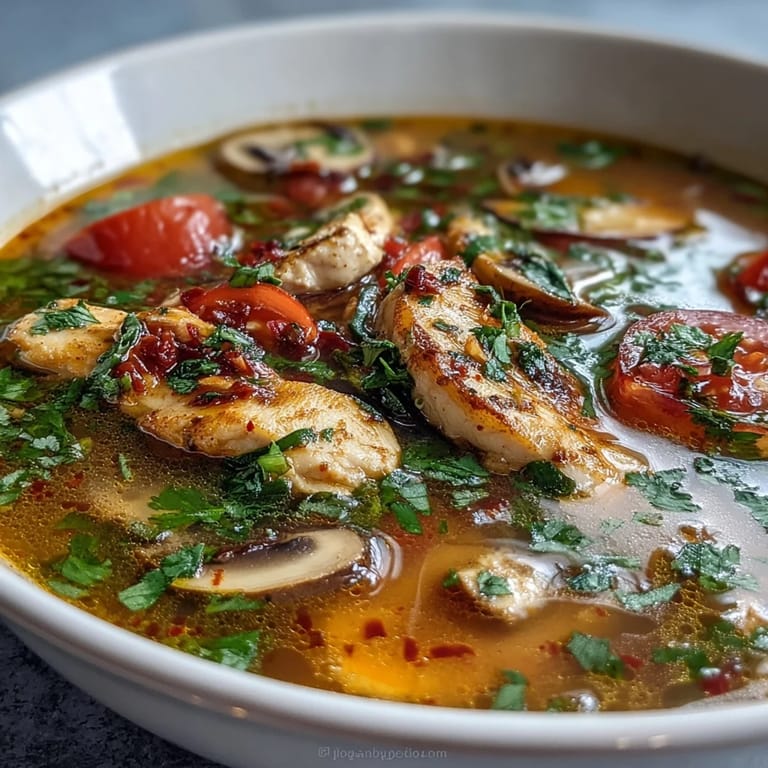
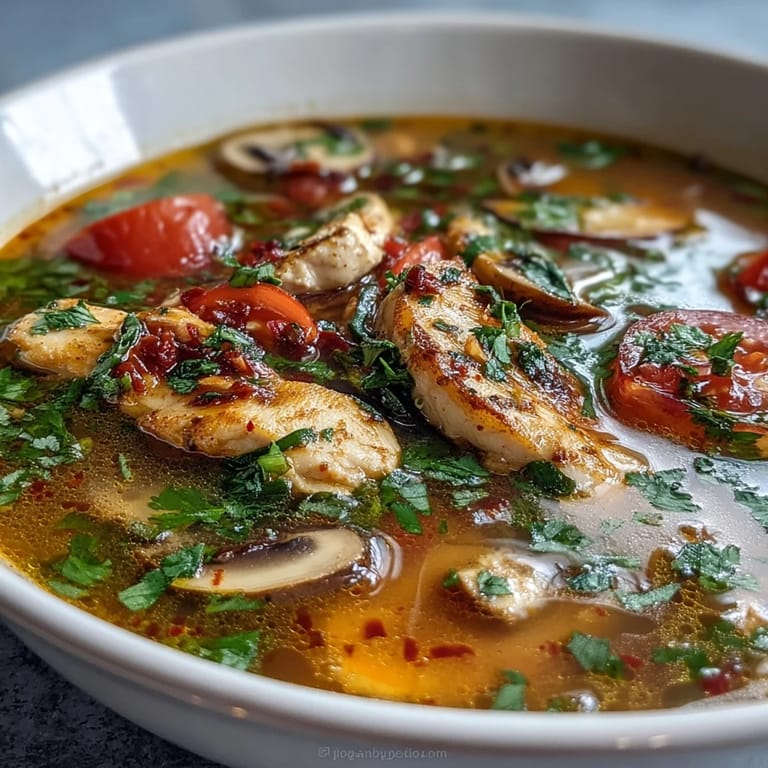
- Ladle into bowls, shower with cilantro and extra chiles if you're feeling bold, and serve immediately with lime wedges on the side so everyone can add their own final touch.
 Pin Now
  Pin Now
 The first time someone I cooked for said this soup reminded them of a place they'd been years ago, I understood why my Bangkok vendor smiled even during the dinner rush. Food that brings people back to themselves is a small kind of magic, and tom yum gai does that every single time.
The Story Behind Tom Yum Gai
This soup exists at the crossroads of Thai street food and home cooking, equally at home in a bustling night market and in someone's kitchen when they want comfort that has teeth. It's been adapted and passed around so much that every region claims their version is the truest, which is exactly how you know it matters to people. The dish represents everything Thai cooking does best: taking a handful of ingredients that shouldn't work together and proving that they're perfect as they are.
Variations Worth Trying
Tom yum gai is flexible enough to bend to what you have on hand, and those variations aren't failures—they're invitations to cook by instinct. Swap shrimp for chicken if you're in a seafood mood, or add a splash of evaporated milk for a creamy tom yum that tastes like a different (still delicious) soup altogether. I've seen people add bamboo shoots, water spinach, or even a dollop of peanut butter, and while the purists might object, the people eating it were always happy.
Why This Matters in Your Kitchen
Learning to make tom yum gai changes how you think about flavor building because you're not following a strict formula—you're learning to taste and adjust as you cook. The confidence you gain from mastering this one soup transfers to everything else you make, from weeknight stir-fries to experiments with whatever's in your fridge. It's a gateway to understanding that Thai cooking isn't complicated, it's just honest.
- Always smash your aromatics to release their oils before the broth hits them.
- Keep nam prik pao on hand because once you taste what it does, you'll want it in other soups too.
- Serve immediately in warmed bowls so the soup stays at its peak temperature and flavor.
 Pin Now
  Pin Now
 There's something about sitting down to a bowl of tom yum gai that makes you slow down, even when everything else is rushing. That's not accident—that's the soup doing exactly what it's supposed to do.
Recipe FAQs
- → Can I substitute the galangal with ginger?
Yes, fresh ginger works as a substitute for galangal, though the flavor will be slightly different. Galangal has a more citrusy, pine-like taste, while ginger is warmer and spicier. Use the same amount of ginger as called for galangal.
- → What is nam prik pao and where can I find it?
Nam prik pao is a Thai roasted chili paste that adds depth, smokiness, and umami to Tom Yum. You can find it in Asian grocery stores or online. Look for brands like Maesri or Mae Ploy in small jars.
- → How spicy is Tom Yum Gai?
The spice level is adjustable. Start with 2 Thai chiles for medium heat. Remove seeds for milder soup, or add more chiles for extra kick. You can also serve extra sliced chiles on the side so diners can customize their heat level.
- → Can I make this soup ahead of time?
You can prepare the broth and aromatics ahead, but add the chicken, vegetables, and lime juice just before serving to maintain freshness and prevent overcooking. The lime juice can turn bitter if stored too long.
- → What's the difference between Tom Yum Gai and Tom Yum Goong?
The main difference is the protein: Tom Yum Gai uses chicken, while Tom Yum Goong features shrimp. Both share the same aromatic broth base with lemongrass, galangal, and lime. You can easily swap proteins based on preference.
- → Do I eat the lemongrass and galangal pieces?
No, the lemongrass, galangal, and kaffir lime leaves are aromatic ingredients meant to infuse flavor into the broth. They're not meant to be eaten. Simply push them aside while enjoying the soup.